
Quick Summary: Platform fees of 30% or more significantly cut into teachers’ actual earnings, especially for low-priced lessons. Independent educators who control their pricing and student relationships keep more revenue and can scale better by moving beyond marketplaces to platforms like SuperTeacher. The key is to focus on net income after fees, build long-term relationships, and expand into group classes and digital products to grow sustainably.
I used to teach online and watched platform cuts eat up as much as 80% of what students paid. Then the company shut down overnight. I had no students, no platform, and no income. That is why I take Teaching Platform Cost, Online Teaching Fees, and Teacher Payment Platforms seriously.
This comparison is for independent educators, tutors, coaches, mentors, and course creators weighing a marketplace against a model they control. We will compare Teaching Platform Cost, Online Teaching Fees, Educational Platform Fees, and Course Fees Calculation across major Teacher Payment Platforms. You will see the Platform Payment Split, Teacher Revenue Share, and impact on Online Class Revenue. I have lived these Revenue Sharing Models myself, so this is not theory. It is a real Teaching Business Model question: what do you keep after Teaching Platform Cost, Online Teaching Fees, and Teacher Payment Platforms take their share?
Teaching Platform Fees at a Glance
| Outschool | Preply | Cambly | Varsity Tutors | Wyzant | SuperTeacher | |
|---|---|---|---|---|---|---|
| Student pays | example: $100 class price + marketplace fee at checkout | example: $30/hour lesson price | example: subscription-based learner plan translated into tutor earnings | example: hourly tutoring rate set by the platform or booking flow | example: $80/hour lesson price | You set the price directly |
| Platform takes | 30% teacher fee | 33% at the entry level; trial lessons can be fully commission-based | Commission-based compensation model | Marketplace/service margin | 25% introduction fee | 0% SuperTeacher service fee on Growth; 2.5% on Starter |
| Tutor keeps | 70% of class price | 67% on standard lessons at the starting tier | Variable tutor pay per minute/session | Platform-determined tutor payout | 75% of lesson price | 100% of teaching income before third-party processing costs on Growth |
| Best for | Kid-focused live classes and enrichment | Language and academic tutoring | Conversational English and flexible practice | U.S. tutoring and test prep | U.S. subject tutoring and test prep | Educators who want to start small and scale |
| Revenue model | Marketplace commission | Tiered marketplace commission | Platform-set tutor compensation | Managed service marketplace | Marketplace commission | Membership software plus direct payments |
Meet the Contenders
Outschool
Outschool is a kid-focused class marketplace where teachers set pricing, then give up a fixed 30% fee. It fits educators selling live enrichment or small group classes to families, especially if they want built-in discovery and checkout.
Preply
Preply is a global tutoring marketplace built for language and academic tutors who want student demand fast. Its angle here is simple: you set your rate, but commission starts at 33% and trial lessons can be 100% commission, so your real keep rate shifts early on.
Cambly
Cambly is a language tutoring platform with platform-managed tutor pay, not a teacher-owned business setup. It suits tutors who want flexible English conversation work more than control over pricing, packaging, or long-term scaling.
Varsity Tutors
Varsity Tutors is a U.S. tutoring marketplace and managed service platform. It fits tutors focused on school subjects and test prep who prefer the platform to handle much of the client relationship.
Wyzant
Wyzant is a U.S. tutoring marketplace where tutors keep more than on many marketplaces. According to Wyzant’s fee page, tutors retain 75% and the platform keeps 25%.
SuperTeacher
SuperTeacher is an educator business platform for teachers who want to keep their revenue and grow beyond 1:1 sessions. Its angle in this comparison is ownership: direct pricing, low platform fees, and room to expand into classes, courses, and products. It is not a marketplace, not the middleman, but a home base for independent educators, who are looking for an all-in-one solution for their tutoring business.
Why a 30% Platform Fee Changes Everything
The real question behind every class price
I learned this the hard way. I used to teach online and watched fees, commissions, and unpaid time eat into my pay. At one point, I was losing up to 80% of what students paid. Then the company I taught through shut down. Overnight, I had no students, no platform, and no income.
That is why the real question is not, “What can I charge?” It is, “What do I actually keep?” If a student pays $40 and the platform takes 30%, you keep $28 before taxes, prep, messaging, and no-shows. Your headline rate looks fine. Your real rate does not.
This gap is common in platform work. In 2025, customer prices on major gig apps rose 9.6% while platform fees per trip jumped 33.2%, according to Gridwise Analytics.
Why marketplace fees hurt 1:1 tutors first
One-to-one tutors feel this faster than almost anyone else because your income is tied to hours. You cannot spread a 30% fee across a big class or a digital product. It comes straight out of one session.
Here is what that usually means:
- A higher sticker price does not mean higher pay
- Admin time becomes unpaid labor
- You need more sessions just to stand still
A 30% commission is not a small software cost. It is often the line between a workable business and an exhausting job.
Seattle’s app-based worker research found that nearly 20% of customer payments were fees to network companies, showing how fast platforms can take a large share before the worker is paid Seattle Labor Standards research.
Outschool vs Preply vs Cambly vs Varsity Tutors vs Wyzant
Here is the simple version: the headline rate is not your real pay. Your real pay is what lands in your account after the platform takes its cut.
Outschool’s fixed service fee model
Outschool is clear about the split. Its official policy says teachers receive 70% of the class price and Outschool takes 30% as the teacher fee, according to Outschool’s earnings policy.
If a parent pays $20 for one seat in your class:
- Student pays: $20
- Platform takes: $6
- You keep: $14
That seems manageable until you stack many enrollments across a month. At 50 seats sold, that same 30% means $300 gone.
A fixed 30% fee is easy to understand. It is much harder to ignore once you run the yearly math.
Preply’s commission starts high and drops with hours
Preply gets more painful at the start. Its official commission model says tutors pay 33% on regular lessons when new, then the rate drops with more completed hours, down to 18% for top tiers. It also keeps 100% of the first trial lesson fee, per Preply’s commission model.
Example at $30 per hour:
- New tutor, regular lesson at 33% commission
- Student pays: $30
- Platform takes: $9.90
- You keep: $20.10
- Experienced tutor, regular lesson at 18% commission
- Student pays: $30
- Platform takes: $5.40
- You keep: $24.60
- Trial lesson
- Student pays: $30
- Platform takes: $30
- You keep: $0
That model can work if you stay long enough and convert trials well. Early on, though, your effective pay is often lower than tutors expect.
Cambly, Varsity Tutors, and Wyzant in the mix
Cambly is different because tutors usually work within a set pay structure, not a rate they fully control. Varsity Tutors also controls more of the payout flow and session terms than a pure independent model. Wyzant is more direct: tutors keep 75% of their posted rate and Wyzant takes 25%, according to Wyzant’s fee structure.
Quick examples:
- Cambly: student value varies, but tutor pay is often near a fixed hourly amount
- Varsity Tutors: student pricing is not always transparent to the tutor
- Wyzant at $60/hour:
- Student pays: $60
- Platform takes: $15
- You keep: $45
The pattern is clear. The more the marketplace owns pricing, trials, and discovery, the less control you have over what you actually earn.
What the Math Looks Like at $25, $50, and $100 an Hour
A platform commission sounds small until you run it against your real rate. In marketplace businesses, the platform keeps a take rate, which is simply its cut of each sale, as explained in this marketplace take rate overview.
Low-price lessons are where commission hurts most
At $25 an hour**, a 30% cut leaves you with **$17.50.
At 33%, you keep $16.75. That is before prep time, admin, and payment delays.
| Student pays | Platform takes 30% | You keep | Platform takes 33% | You keep |
|---|---|---|---|---|
| $25 | $7.50 | $17.50 | $8.25 | $16.75 |
| $50 | $15.00 | $35.00 | $16.50 | $33.50 |
| $100 | $30.00 | $70.00 | $33.00 | $67.00 |
That is why lower-priced tutoring gets squeezed fastest.
- A small fee takes a big bite out of an already modest lesson price
- One canceled hour hurts more
- You need more sessions just to hit the same weekly income
If your offer is priced low, commission is not a side cost. It changes your whole business model.
Higher-ticket offers create more room for fees
At $50 an hour**, a 30% fee still takes $15. Painful, but workable if demand stays strong.
At $100 an hour, losing **$30 to $33 per lesson is still expensive, yet you have more margin left to grow.
Research from William Blair found marketplace take rates averaged 19.4% across 319 companies, with some running far higher, especially in certain verticals, according to their take-rate study.
So the simple rule is:
- Low-ticket offers get crushed by commission
- Mid-ticket offers can absorb it for a while
- High-ticket offers buy you more breathing room, not freedom
SuperTeacher matters most once you see this clearly: keeping your full rate gives you more room to scale, test group classes, and build offers beyond 1:1.
Also Read: 11 Classes
What Marketplace Fees Do to Your Teaching Business Model
I learned this the hard way. I used to teach on platforms that took a huge cut, then one company shut down and my students vanished with it. That is the real risk. Fees hurt your pay, but loss of control hurts your whole business.
Control is the hidden cost
A marketplace does not just take 30 percent of a lesson. It often controls your student flow, pricing room, and contact with buyers. If rankings change, your income can drop fast. The wider platform economy faces the same problem. The ILO notes that new rules now focus on platform transparency and automated decision-making because workers often do not know how pay, visibility, or job access gets shaped by the system ILO update.
If you do not own the audience, you do not own the business.
- You depend on search placement
- You cannot freely move students off-platform
- You build the demand, but the platform owns the pipe
Growth gets expensive when the platform owns the ceiling
High commissions punish growth. The more you earn, the more you give away. That makes it harder to:
- Raise rates
- Hire help
- Add group classes
- Build courses or products
Human Rights Watch reported that many platform workers face opaque pay systems and weak bargaining power, which is exactly why scaling inside a marketplace often feels capped Human Rights Watch report.
A platform can help you start. It rarely helps you keep more as you grow. That is why many educators eventually move to a model they control.
Why SuperTeacher Is the 100% Alternative for Independent Educators
I built this from the other side of the problem. I taught online, watched platforms and commissions eat my income, and learned the hard way that renting your business from someone else is risky. The wider market is also moving toward direct creator ownership. The creator economy keeps growing because more people want direct-to-audience income, according to Grand View Research.
Start independent with 1-on-1 tutoring
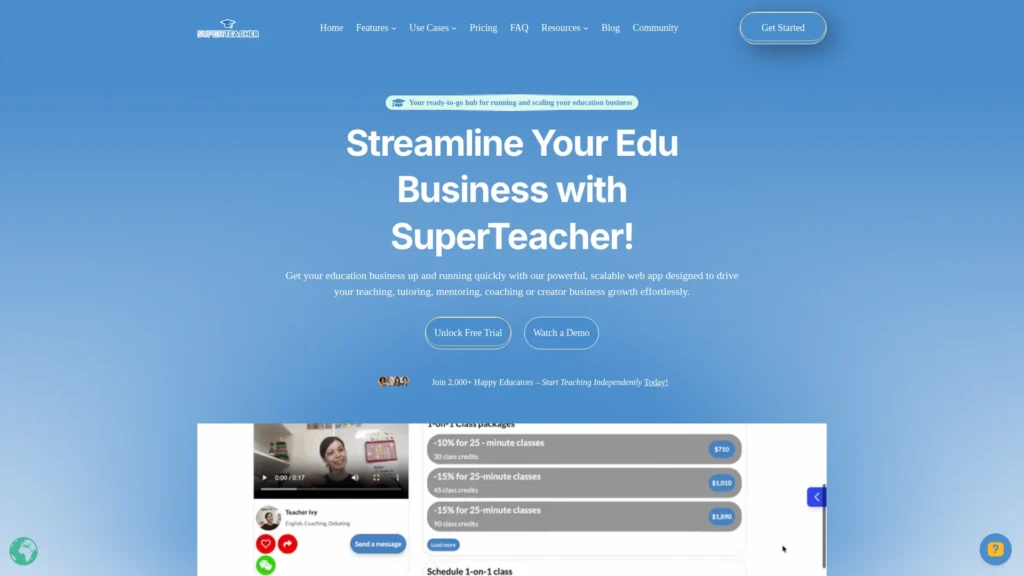
SuperTeacher starts where most independent educators actually start: paid 1-on-1 sessions. You set your rate, choose your schedule, and own the student relationship from day one. That matters more than fancy features.
Instead of chasing marketplace placement, you build a real teaching business:
- keep what your student pays
- manage bookings and payments in one place
- stay in touch without stitching together extra tools
If you already know how to teach, the next step is not joining another commission-based platform. It is keeping control of your revenue and your student list.
Scale into group classes, self-paced courses, hybrid courses, and digital products
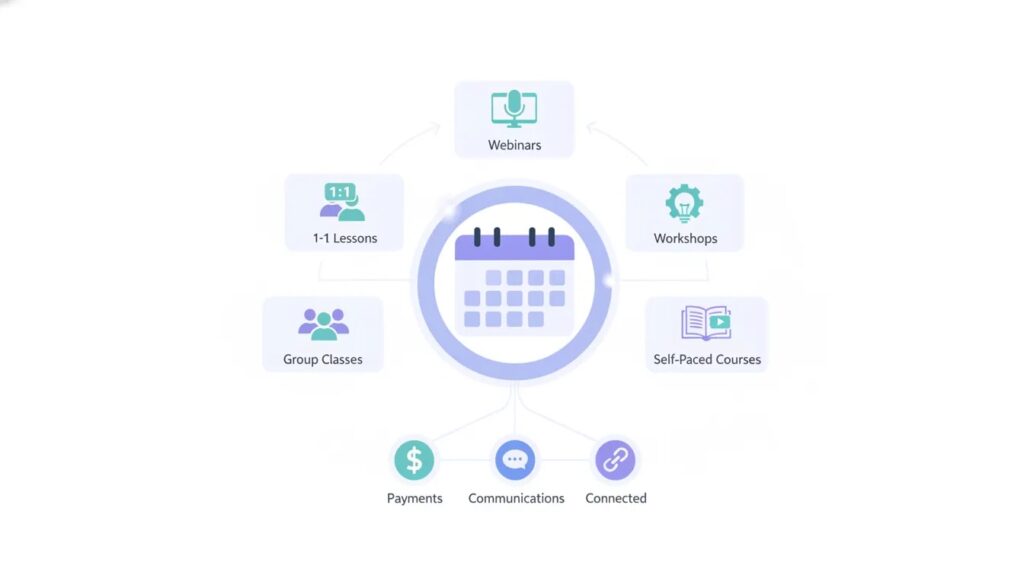
Most platforms are built for one format. SuperTeacher is built for the path educators actually take as they grow.
That path usually looks like this:
- Start with 1-on-1 tutoring
- Add group classes once demand builds
- Turn repeat lessons into self-paced courses
- Create hybrid offers with live support plus recorded content
- Sell digital products like worksheets, guides, and templates
This matters because scaling is not about working more hours. It is about selling your expertise in more than one way. Ruzuku’s 2026 course data shows that pricing and results vary a lot by format, and live or hybrid offers often support stronger value than basic self-paced content alone Ruzuku’s 2026 course data.
What keeping 100% changes in practice
Keeping 100% changes your math fast.
- A $40 lesson stays $40 before payment processing
- A 10-student group class at $20 each becomes $200 revenue
- A course or digital product keeps selling without trading more hours
You stop thinking like a gig worker. You start thinking like a business owner.
That is the real point of SuperTeacher. It is not only a place to begin. It is a platform you can grow into.
Also Read: Resources
How to Choose the Right Platform for Your Stage
Choose based on what you need right now. Early on, student flow may matter more than margin. Later, keeping control matters more.
Choose a marketplace when discovery matters more than margin
A marketplace makes sense if you need students fast and do not yet have your own audience. You trade a chunk of your pay for search traffic, trust, and built-in bookings. That can be worth it at the start, especially if empty calendar slots are your biggest problem. As PMT Education explains, platform fees often cover discovery, payments, and admin support.
- Good fit if you are new
- Good fit if you need proof, reviews, and practice
- Bad fit if margin is already tight
If a platform helps you fill your week, the fee may be a marketing cost, not just a loss.
Choose SuperTeacher when you want to build an education business
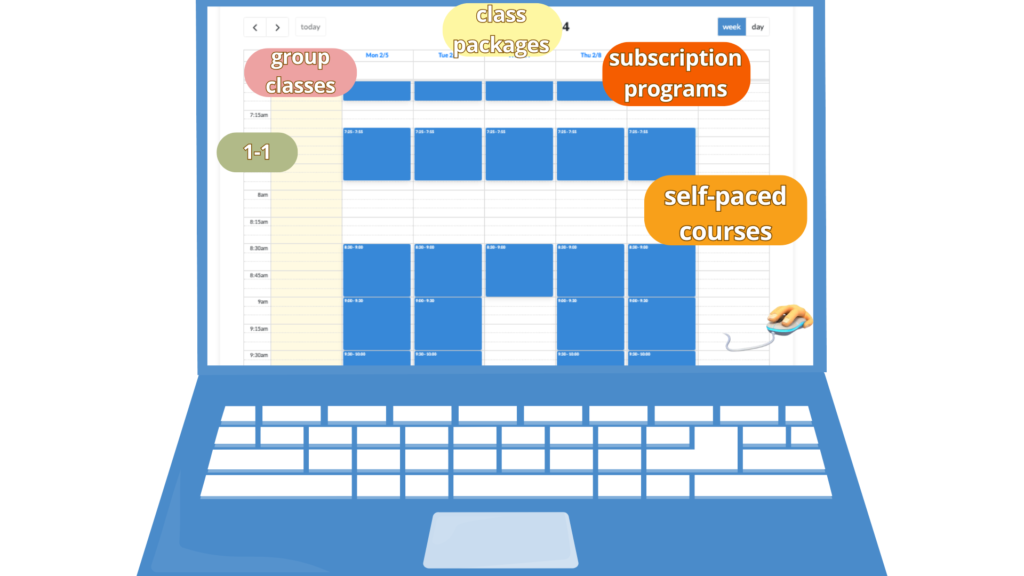
SuperTeacher fits the next stage. You already know how to teach, and now you want to keep more of your tutoring income, own the student relationship, and grow past 1:1 sessions. That matters because marketplaces are built for transactions, while your business needs room to expand. The real trade-off is traffic versus ownership.
- Start with private lessons
- Add group classes
- Launch self-paced or hybrid courses
- Sell digital products
Pick a marketplace to start. Pick SuperTeacher to niche out and scale.
Which Should You Choose if You Want to Keep More of What You Earn?
If you need students fast
Choose a marketplace if your first problem is empty calendar slots. You will give up margin, but you may get demand faster than you could on your own. That trade can make sense at the start.
- You get built-in traffic
- The platform handles checkout and some admin
- You usually earn less per lesson
Research on the UK online tutoring sector also warns that platform work can mean low pay and weak control for tutors, according to Queen’s University Belfast research.
Fast student access is useful. It is not the same as a stable business.
If you want to build durable income
Choose the path that lets you keep the student relationship and most of the payment. That usually means using marketplaces only as a starting point, not your whole business.
A simple rule helps:
- Use marketplaces to fill early gaps
- Move repeat students into your own system when allowed
- Build direct offers you control
- Add formats that scale beyond live 1:1 time
This matters because commission models can cut deeply into real take-home pay. A 2026 comparison showed the same broad lesson could leave tutors with very different earnings once fees were removed, depending on platform structure and buyer mix, as shown by Chalk Index’s fee analysis.
That is where SuperTeacher fits best. It is stronger for educators who want to grow from 1:1 tutoring to group classes, courses, and digital products without losing a third of each sale.
If you are tired of losing 30% or more before the money even reaches you, move to SuperTeacher. It helps you run lessons, take payments, manage students, and grow from 1-on-1 sessions to groups, courses, and digital products – without giving away your income.
Frequently Asked Questions
Q1: How do platform fees impact educator earnings and student pricing?
A 30% fee cuts pay fast. If a student pays $50, you keep $35 before payment costs or taxes. Many teachers raise prices to protect income, but higher prices can lower bookings and make repeat sales harder.
Q2: What strategies can educators use to offset platform commissions of 30%?
Use group classes, shorter high-value sessions, and simple add-ons like worksheets or recordings. Raise rates carefully. Improve retention so each student stays longer. A lower-fee setup, including SuperTeacher, also helps you keep more from every sale.
Q3: How does platform commission affect teaching profitability in global markets?
Commission hurts more in lower-price markets. A 30% cut on a $12 lesson leaves little room after currency shifts, refunds, and transfer costs. Teachers in global markets need strong margins, repeat students, and better control over pricing.
Q4: What are the most effective ways for independent teachers to maximize income after platform fees?
Focus on lifetime value, not one lesson. Keep students longer, move from 1-on-1 to groups, add self-paced offers, and reduce admin time. The more you sell beyond live hours, the less platform cuts limit your growth.
Q5: How to calculate net income for educators paying 30% platform fees worldwide?
Start with student price. Subtract platform commission, payment processing, discounts, and refunds. Then subtract prep time, tools, and taxes. Last, divide by total hours worked, not teaching hours only. That shows your real hourly earnings.
Q6: What are the best practices for educators to negotiate platform fees or reduce commission costs?
Most big marketplaces do not negotiate much, so focus on what you control. Read fee terms closely, avoid low-margin offers, increase package value, and build direct systems over time so fewer sales depend on commission-heavy platforms.
Q7: How does SuperTeacher’s fee structure compare to other online education platforms globally?
The key difference is ownership of revenue and growth path. Instead of losing a large share of each sale, educators keep what they earn and can grow from tutoring into groups, courses, and digital products in one place.
Q8: What are the long-term financial implications of platform commissions on independent educators’ income?
Over months, a 30% cut can equal thousands lost. That money could fund ads, tools, savings, or time off. High commissions also delay scaling, because you need more students just to reach the same take-home pay.
Conclusion
The math is the point. If a platform takes 25% to 33% of what students pay, your real hourly income drops fast, and it gets worse when trial lessons, payment fees, or fixed low rates cut deeper. That gap matters in a field where the U.S. median tutor pay is $19.27 an hour. We also know platform work often shifts more of the price increase to the company than the worker, as Investopedia reported on gig platform fees in 2026. The clearest takeaway is simple: compare what lands in your account, not the headline student price, and choose a model that lets you grow without giving more away each time you scale.
Leave a Reply