
Going independent as an online tutor can give you more control over your teaching, pricing, and client experience. But leaving a tutoring marketplace also means taking responsibility for the business systems the platform once handled for you.
The transition does not need to be complicated. You need a simple setup that lets families understand what you offer, book and pay you easily, and receive a professional experience from their first inquiry through every lesson.
Key Takeaways
- Start with one classroom, curriculum process, and booking system rather than overcomplicating your setup.
- Offer one to three clear tutoring packages so clients can easily understand and choose your services.
- Set prices that cover business expenses and support the income you want to earn.
- Clear policies and a simple sales funnel make your tutoring business easier to manage professionally.
Table of Contents
- What It Means to Go Independent as a Tutor
- 1. Choose Your Essential Tutoring Technology
- 2. Create a Clear Tutoring Offer
- 3. Set Tutoring Prices That Reflect Your Real Costs
- 4. Put Clear Tutoring Policies in Place Before Problems Arise
- 5. Build a Simple Sales Funnel for Your Tutoring Business
- Common Mistakes When Leaving a Tutoring Marketplace
- Independent Tutor Launch Checklist
- The Best Way to Start Teaching Independently
What It Means to Go Independent as a Tutor
An independent tutor runs their own teaching business rather than relying entirely on a tutoring marketplace to provide the classroom, bookings, customer flow, and payment structure.
This approach is especially relevant if you have built teaching experience on a platform and want a more stable business model. Marketplaces can be useful, but your work can become vulnerable when a platform changes its rules, reduces opportunities, or suddenly closes.
Teaching independently means creating a basic system around five essentials:
- A reliable way to deliver lessons online
- Clear tutoring packages and outcomes
- Prices that support your income goals and expenses
- Written policies for clients
- A sales funnel that turns inquiries into booked students
You do not need to build an elaborate business before you begin. A clear, functional foundation is more valuable than a complicated collection of tools.
1. Choose Your Essential Tutoring Technology
Technology can become a major reason tutors delay going independent. The solution is to make a few decisions and commit to them rather than endlessly comparing every available platform.
At minimum, choose one tool or process for each of these areas:
Online classroom
Your online classroom is where live teaching happens. Pick a dependable virtual meeting solution that you can confidently use with students and parents. Consistency matters more than finding a perfect platform.
Curriculum and lesson materials
Decide what you will teach and how you will organize it. Your curriculum may include your own lesson plans, teaching resources, assessments, homework, or a structured sequence of skills.
Students and parents should be able to understand what learning will look like after they enroll. A repeatable teaching framework also helps you deliver quality lessons without rebuilding every class from scratch.
Booking system
A booking system gives clients a straightforward way to select an available lesson time. This removes unnecessary back-and-forth messages and creates a smoother experience before the first class.
Keep the first version simple: one classroom, one curriculum approach, and one booking process are enough to start operating independently.

2. Create a Clear Tutoring Offer
A tutoring offer is more than a description such as “English lessons” or “math tutoring.” It tells prospective clients exactly what they can book, who it is designed for, and how the service is structured.
When your offer is unclear, potential clients may not know which lesson to choose or why they should commit. A focused offer makes your marketing and enrollment process easier.
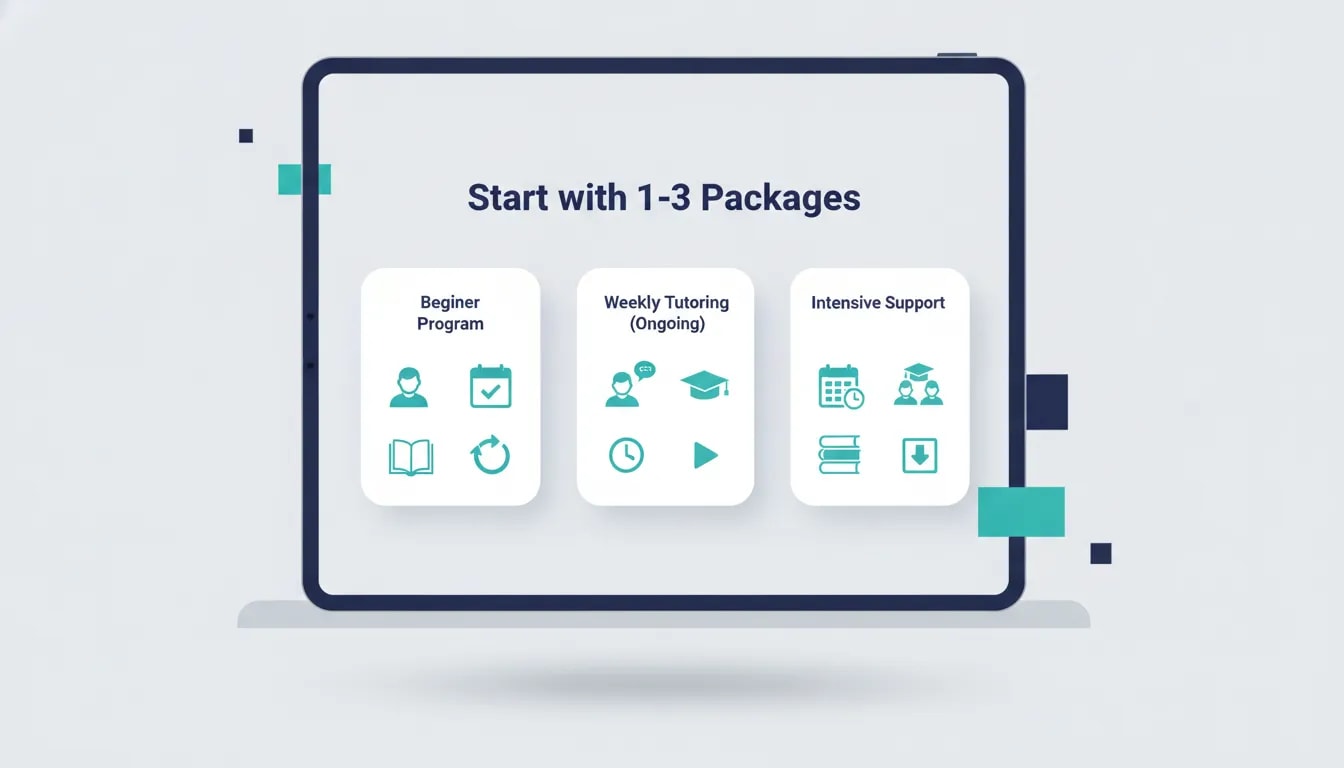
Start with one to three packages
You do not need a large menu of services at the beginning. One to three well-defined packages are enough to give clients options without creating confusion.
For each package, clarify:
- Who it is for: the learner type, level, or need you serve
- What is included: lesson frequency, duration, materials, or support
- The teaching focus: the skill, subject, or learning goal
- How clients book: the practical next step to enroll
For example, instead of offering a broad, undefined tutoring service, you might organize your services around a beginner program, an ongoing weekly tutoring package, and a more intensive support option. The exact packages should reflect what you can teach well and deliver consistently.
3. Set Tutoring Prices That Reflect Your Real Costs
Independent tutoring prices should account for more than the time spent in a live lesson. If your rate only reflects teaching time, you may overlook the costs and work required to run your business.
Consider the full picture, including:
- Online classroom and booking tools
- Curriculum, teaching materials, and resources
- Administrative work and client communication
- Lesson preparation and follow-up
- Any other expenses needed to deliver your service
- The income you want your tutoring business to provide
Your pricing should help you cover business expenses while allowing you to earn the amount you are working toward. Underpricing may feel like an easy way to attract clients, but it can make an independent tutoring business difficult to sustain.
A practical pricing check
Before publishing a rate, ask yourself:
- Does this price account for the costs of running my tutoring business?
- Does it reflect the preparation and support around each lesson?
- Can I reach my income goal at this rate and a realistic teaching schedule?
- Can I deliver this service consistently without overworking?
If the answer is no, adjust the price, package structure, workload, or all three before you begin.
💡 Bonus tip : check out PriceMyClass, a free mini app that helps you define your prices properly and actually earn what you want! 🎯

4. Put Clear Tutoring Policies in Place Before Problems Arise
Policies protect both you and your clients. They set expectations early, reduce avoidable misunderstandings, and make it easier to handle scheduling issues consistently.
Do not wait for a difficult situation before deciding how you will handle it. Share your policies from the beginning, ideally before a client books a package.
Policies to define
- Cancellations: what happens when a lesson is canceled
- Rescheduling: when and how clients can change a booking
- Late arrivals: how a late start affects the lesson time
- Missed lessons: what happens if a student does not attend
- Payments: when payment is due and how packages are handled
- Communication: how clients should contact you and when they can expect a reply
Policies do not need to be overly long or intimidating. They need to be understandable, accessible, and applied consistently.
💡 Bonus tip: try out our free mini app EduTerm and create your terms and conditions in classroom policies within minutes!
5. Build a Simple Sales Funnel for Your Tutoring Business
A sales funnel is the path someone follows from first discovering your tutoring services to becoming a paying client. Without one, you can end up answering the same questions repeatedly, manually coordinating every booking, and losing potential clients when communication becomes unclear.
The purpose of a funnel is not to make your business feel impersonal. It is to handle routine steps so you can spend more time doing your best work: teaching.
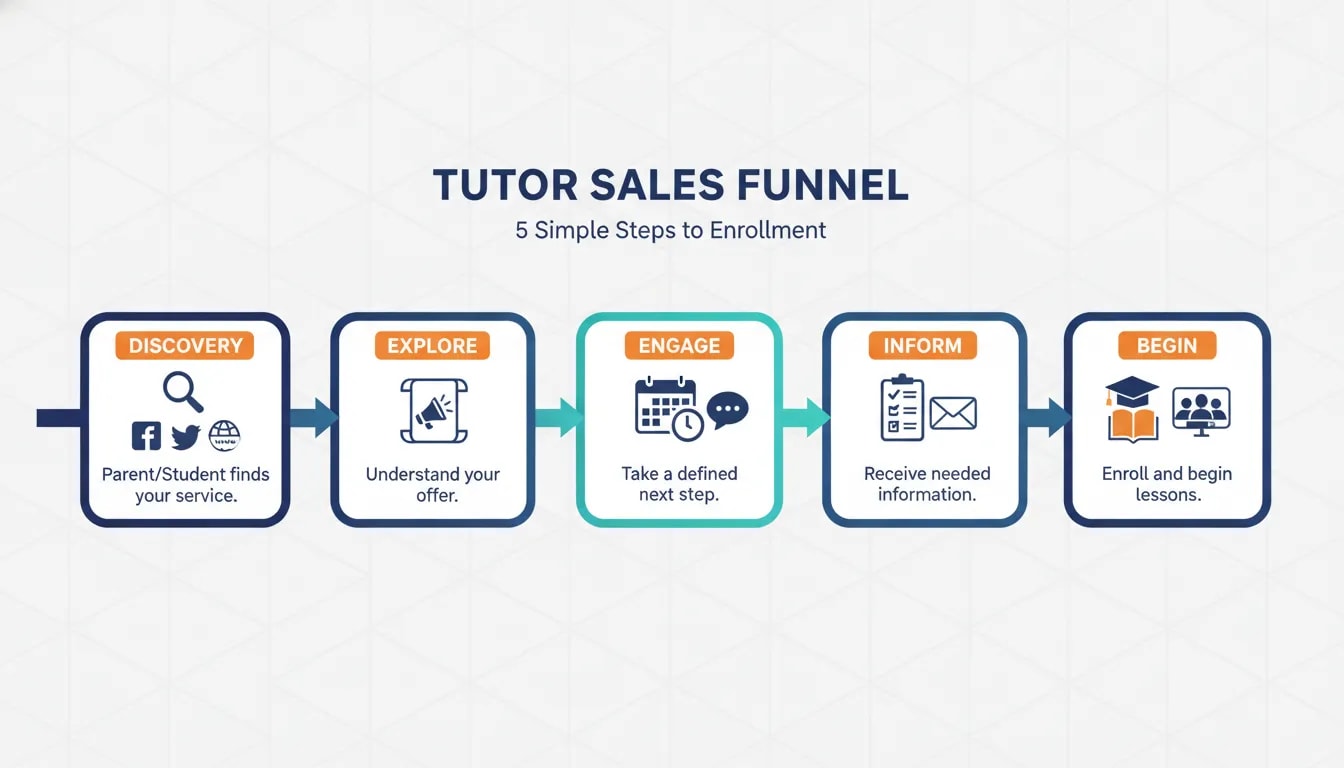
A basic tutor sales funnel
- A parent or student finds your service. This could happen through a referral, social profile, website, or other channel.
- They understand your offer. Your page or message clearly explains who you help, what you teach, and available packages.
- They take a defined next step. This may be submitting an inquiry or booking through your chosen system.
- They receive the information they need. Share practical details such as availability, expectations, policies, and payment instructions.
- They enroll and begin lessons. Your onboarding process makes the start of tutoring organized and professional.
A simple funnel reduces friction for prospective clients and creates a repeatable process for you. It also helps you avoid the common trap of spending so much time on administrative tasks that teaching becomes harder to manage.
Common Mistakes When Leaving a Tutoring Marketplace
Trying to set up everything at once
It is easy to believe you need a polished website, extensive software stack, multiple programs, and advanced automation before accepting clients. In reality, a basic classroom, curriculum, booking process, clear offer, and policies are enough to begin.
Offering too many choices
Too many packages can make it difficult for clients to decide and harder for you to deliver consistently. Start with a focused set of one to three services, then refine them as your business develops.
Copying marketplace pricing without reviewing your costs
Marketplace rates may not account for the full responsibilities of running an independent business. Review your expenses and income goals instead of selecting a price by habit or comparison alone.
Leaving policies vague
Unclear cancellation, payment, and scheduling rules often lead to uncomfortable conversations later. Written expectations are easier for everyone to follow.
Relying only on manual messages
Personal communication is important, but every booking should not require a long chain of messages. A defined client journey helps people take action and helps you keep your business organized.
Independent Tutor Launch Checklist
Use this checklist before opening your independent tutoring services to new clients:
- Choose an online classroom platform.
- Organize your curriculum and lesson materials.
- Set up one clear method for clients to book lessons such as SuperTeacher.
- Create one to three tutoring packages.
- Review your business expenses and set sustainable prices.
- Write cancellation, rescheduling, payment, and communication policies.
- Map the path from inquiry to enrollment.
- Prepare the information new clients need before their first lesson.
The Best Way to Start Teaching Independently
Successful independent tutoring is built on clarity, not complexity. Choose your essential tools, define a small number of offers, price them responsibly, set policies early, and create a clear route from interest to booking.
Once those foundations are in place, you can focus your energy where it matters most: delivering excellent tutoring and building direct relationships with the students and families you serve.
Frequently Asked Questions About Going Independent as a Tutor
What do you need to become an independent online tutor?
You need a way to teach online, organized curriculum or lesson materials, a booking process, clear tutoring packages, sustainable pricing, client policies, and a process for turning inquiries into bookings.
How many tutoring packages should you offer at first?
One to three packages are enough when you are starting. A smaller selection makes your services easier for clients to understand and easier for you to deliver consistently.
Why do independent tutors need written policies?
Written policies establish expectations around cancellations, rescheduling, payment, attendance, and communication before misunderstandings occur.
What is a sales funnel for tutoring?
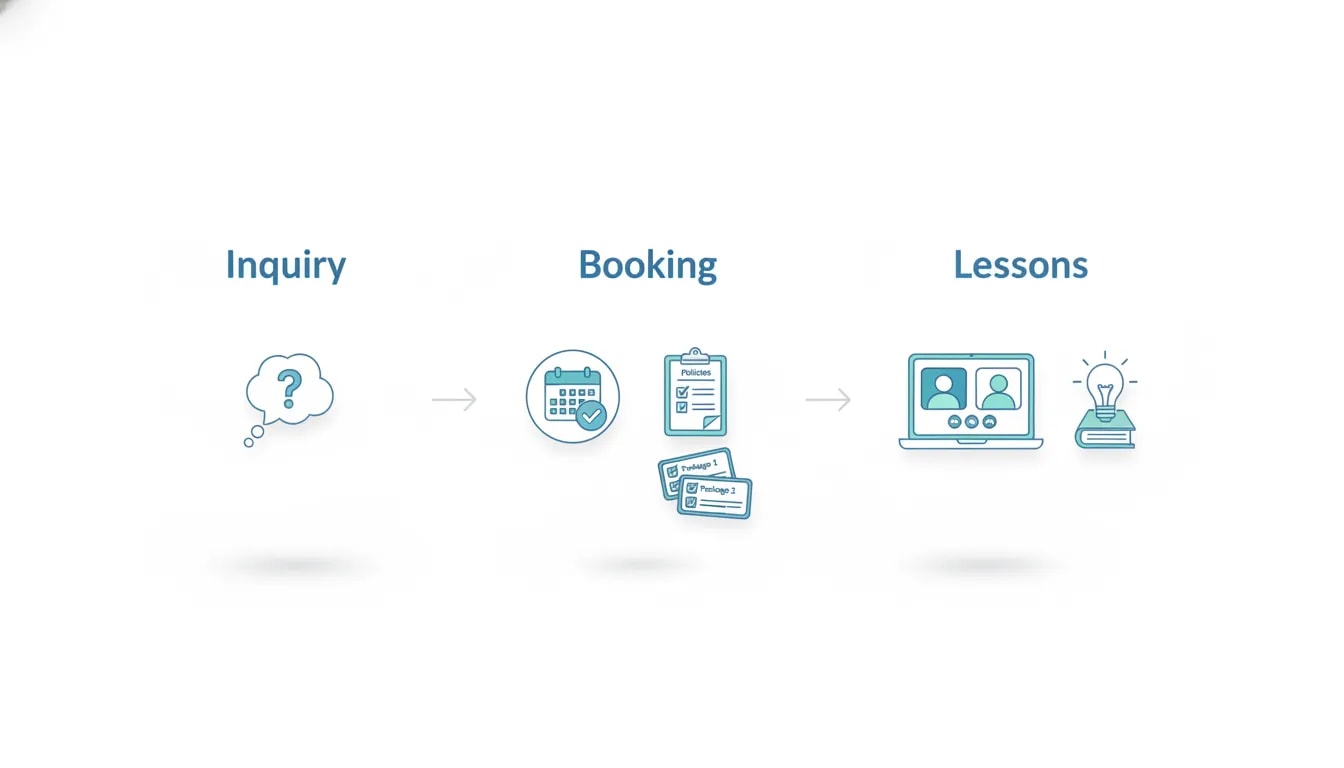
A tutoring sales funnel is the process that guides a prospective client from discovering your services to understanding your offer, booking, receiving key information, and starting lessons.
Check out SuperTeacher
Join 2,000+ Happy Educators – Start Teaching Independently Today!
Leave a Reply