
If your tutor introduction begins with your name, certifications, years of experience, and love of teaching, you may be answering the wrong question. Prospective students are usually focused on their own goals, frustrations, and obstacles first.
Strong tutor positioning makes it immediately clear who you help, what problem you solve, and what outcome you help them work toward. Your qualifications still build trust, but they should support that core message rather than replace it.
Why a General Tutor Introduction Often Fails
Many tutoring profiles sound alike: “I teach English online,” “I am an experienced math tutor,” or “I am a qualified teacher with several years of experience.” These statements may be true, but they do not tell a student whether you are the right person for their particular situation.
A student may be wondering:
- Can you help with the issue I am struggling with right now?
- Do you understand what is making this difficult for me?
- Can you help me reach the result I want?
- Have you worked with learners whose needs are like mine?
When your introduction focuses only on your background, the student must do the work of connecting your credentials to their needs. Clear positioning removes that uncertainty.
What Tutor Positioning Means
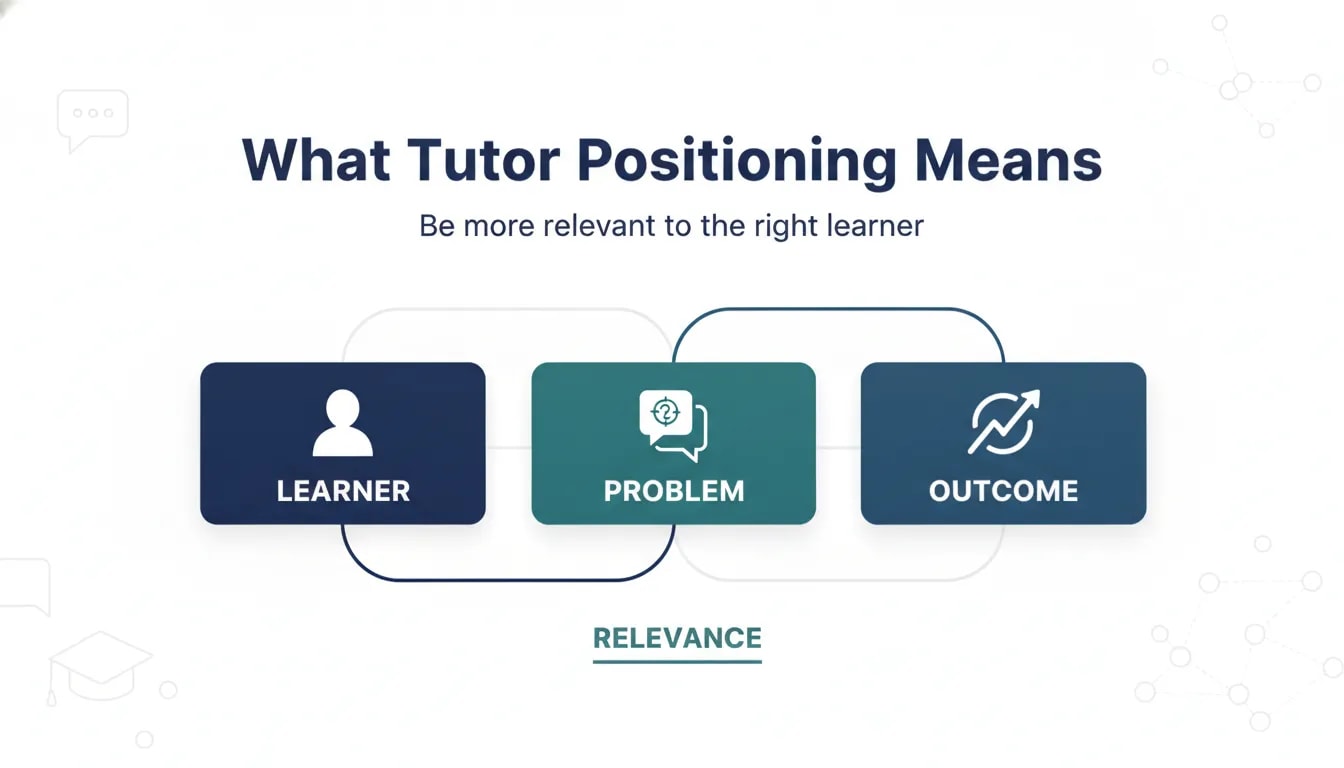
Tutor positioning is the way you explain your value so the right learner can quickly recognize that you can help them. It is not about being louder, claiming to be the best, or trying to appeal to everyone.
It is about being more relevant.
A clear positioning statement has three parts:
- The learner: the type of person you help.
- The problem: the specific challenge, frustration, or need they have.
- The outcome: the result you help them achieve.
For example, compare these two descriptions:
- General: “I teach English online.”
- Problem-focused: “I help busy professionals become more confident speaking English in meetings.”
The second description is more useful because it identifies the learner, the context where they need support, and the transformation they want.
Start With the Student’s Problem, Not Your Biography
Your introduction should show that you understand what the learner is experiencing. Rather than leading with a list of credentials, begin by naming a relevant struggle or goal.
Questions that help uncover the right message
Think about the students you most want to help. Then consider:
- What are they struggling to do?
- What are they frustrated by?
- What are they trying to achieve?
- What have they already tried without success?
- What support do they wish they could find?
Your answers reveal the language that should shape your profile, introduction, and tutoring offer.
A simple tutor introduction formula
Use this structure:
Are you struggling with [specific challenge] or trying to [specific goal]? I help [type of learner] [work toward a clear outcome] through [your subject or support].
You can then add a brief credibility statement that explains why you are equipped to help.
For example:
Are you trying to speak more confidently in English meetings? I help busy professionals build confidence communicating at work. My teaching experience supports a practical, focused approach to that goal.
This approach puts the student’s need first while still leaving room for relevant experience and qualifications.
Choose a Niche That Creates Recognition
Being known simply as an English tutor or math teacher can make it difficult for students to remember what makes you relevant. A niche gives your tutoring business a clearer identity.
Your niche does not need to be overly narrow or complicated. It can be based on one or more of these areas:
- A particular learner: such as busy professionals.
- A particular challenge: such as confidence in spoken communication.
- A particular goal: such as contributing more effectively in meetings.
- A particular transformation: moving from hesitation to confidence in a meaningful context.
The aim is not to exclude every other potential student. It is to make the right student feel understood quickly.
How to Turn General Tutoring Language Into a Clear Offer
Review the wording on your tutor profile, website, social media bio, or introductory message. Look for broad phrases that describe your subject but not the learner’s need.
Step 1: Identify your broad subject
Start with what you teach, such as English, math, science, exam preparation, or another subject area.
Step 2: Identify the learner you want to serve
Choose a group whose needs you understand and want to address. The source example uses busy professionals learning English.
Step 3: Name a meaningful problem or goal
Focus on what matters to that learner in real terms. For professionals, the issue may not simply be “learning English.” It may be speaking with greater confidence in meetings.
Step 4: State the outcome clearly
Describe the improvement the student is seeking. Use language that is specific enough to be recognizable, without making promises you cannot support.
Step 5: Add credentials as proof, not as the headline
Experience, certifications, and training matter. They help establish credibility after students understand why your tutoring is relevant to them.
A useful order is:
- Student problem or goal
- How you help
- Relevant experience or qualifications
Where to Use Your Positioning Statement
Consistency helps students recognize what you are known for. Once you have a clear message, use it wherever prospective students first encounter your tutoring business.
- Your tutor introduction
- Your tutoring platform profile
- Your independent tutoring website like SuperTeacher
- Your social media bio
- Your introductory messages
- Your service descriptions
You do not need identical wording everywhere. However, the learner, problem, and outcome should remain consistent enough that your message is easy to remember.
Common Tutor Positioning Mistakes to Avoid
Leading with credentials alone
Qualifications can demonstrate competence, but they do not automatically show why you are the right match for a particular learner. Connect your background to the problem you help solve.
Using only broad subject labels
“English tutor” or “math teacher” identifies a category, not a solution. Add context about the learner’s situation or intended result.
Trying to appeal to everyone
A message designed for every possible learner often feels personal to no one. Specificity makes it easier for the right student to recognize themselves in your description.
Listing methods without explaining the outcome
Students need to understand what your support is for. Explain the challenge or goal before emphasizing your approach, experience, or teaching style.
Making your background the entire message
Your experience should reinforce your positioning. It should not force prospective students to guess how it applies to their needs.
A Quick Checklist for Your Tutor Profile
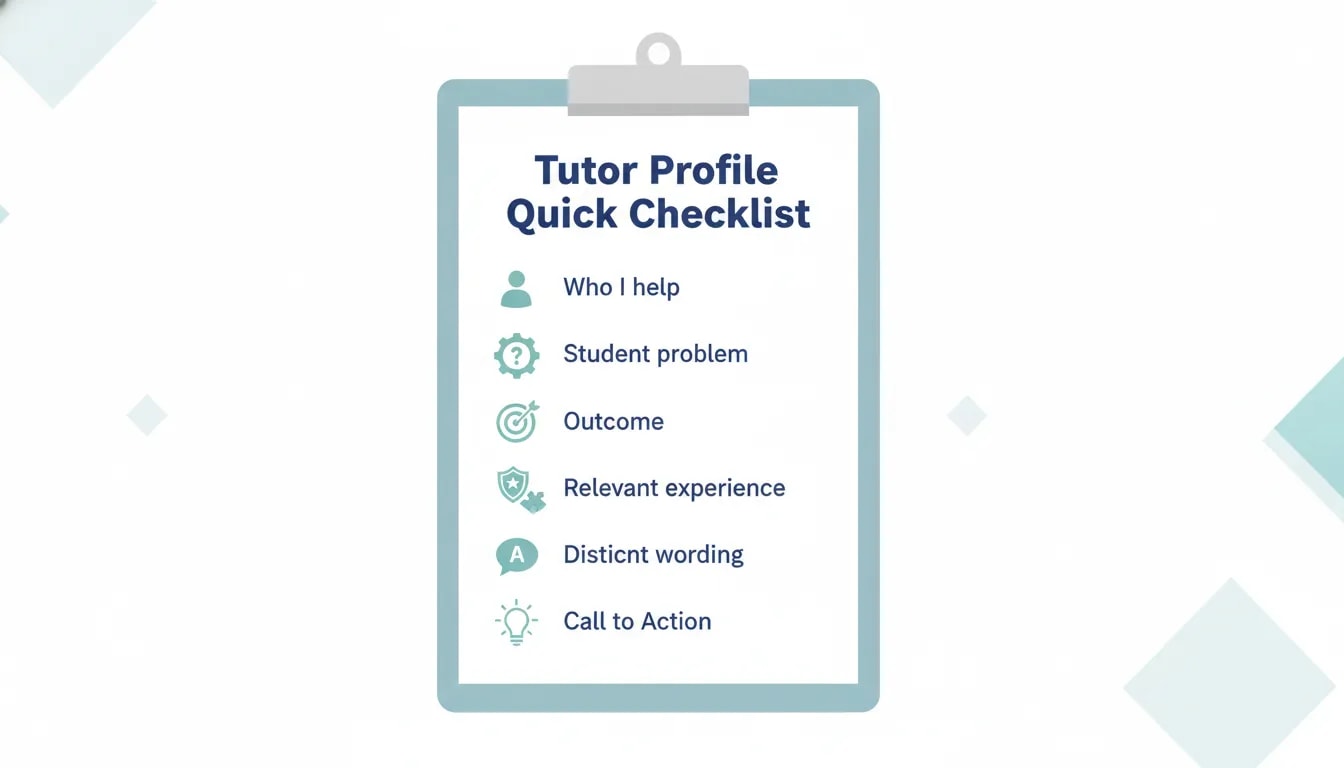
Before publishing or updating your introduction, check whether it answers these questions:
- Can a student immediately tell who I help?
- Have I named a recognizable problem, goal, or frustration?
- Have I explained the outcome I help students pursue?
- Does my experience support the message rather than dominate it?
- Would the right student feel that this tutoring is relevant to them?
- Does my wording distinguish me from a broad list of similar tutors?
The Goal: Be the Tutor the Right Student Recognizes
Independent tutors need more than a list of credentials to build recognition. A clear niche and problem-focused message help students understand why your support fits their situation.
Instead of asking students to choose the most impressive-looking tutor, make it easy for the right student to think: this tutor understands what I need help with.
Do not aim to be another general tutor. Aim to be known for solving a problem that matters to a specific learner.
Frequently Asked Questions About Tutor Positioning
Do I need a niche to become an independent tutor?
A niche helps people recognize who you help and why your tutoring is relevant. It can be based on a type of learner, a specific problem, or an outcome you help students work toward.
Should I include my qualifications in my tutor introduction?
Yes. Qualifications and experience build credibility, but they are most effective when they support a clear explanation of the student problem you solve.
What should a tutor say instead of “I teach English online”?
Explain who you help and the outcome they want. For example, you might describe helping busy professionals become more confident speaking English in meetings.
How specific should a tutoring niche be?
It should be specific enough that the right learner can quickly recognize their challenge or goal. Focus on a meaningful learner need rather than trying to create an unnecessarily narrow label.
Check out SuperTeacher
Join 2,000+ Happy Educators – Start Teaching Independently Today!
Leave a Reply