
One of the biggest shifts in independent teaching has nothing to do with lesson planning, curriculum, props, or even tech.
It is mindset.
Most of us were trained to think like teachers. Show up, teach well, support the student in front of us, do a good job, repeat. That works inside companies and platforms because the system around us already exists. The students are there. The policies are there. The curriculum is there. The schedule is there.
But when you go independent, teaching well is only one piece of the puzzle.
You also need to think like a business owner. You need to know what you offer, who it is for, how people find you, what happens after they find you, and how you turn that interest into a stable flow of paying students.
That sounds big and abstract at first. It is not. It is actually very practical.
The whole shift starts with one simple question: What exactly are you working toward?
Stop saying “I want more students”
“I want more students” feels like a goal, but it is not a useful one.
It is emotional. It is vague. And vague goals create vague action.
A business goal needs structure. It needs numbers. It needs a timeline. It needs clarity.
Compare these two versions:
- I want more students.
- I want to earn $2,000 by May 25.
The second one immediately changes how you think. Now you can do the math. Now you can reverse-engineer the path. Now you can ask better questions.
For example:
- How many students do I need?
- How many classes does that mean?
- What class price supports that goal?
- How many leads do I need to generate?
- What marketing actions actually matter this week?
This is where independent teaching gets easier, not harder. Once the goal is specific, the path becomes much less foggy.
The real problem usually is not your teaching
A lot of independent educators assume the struggle must be one of these:
- I am not visible enough.
- I am not posting enough.
- I need a better website.
- I need more materials first.
- I need to finish my whole course before I market anything.
- Maybe I am just not good enough.
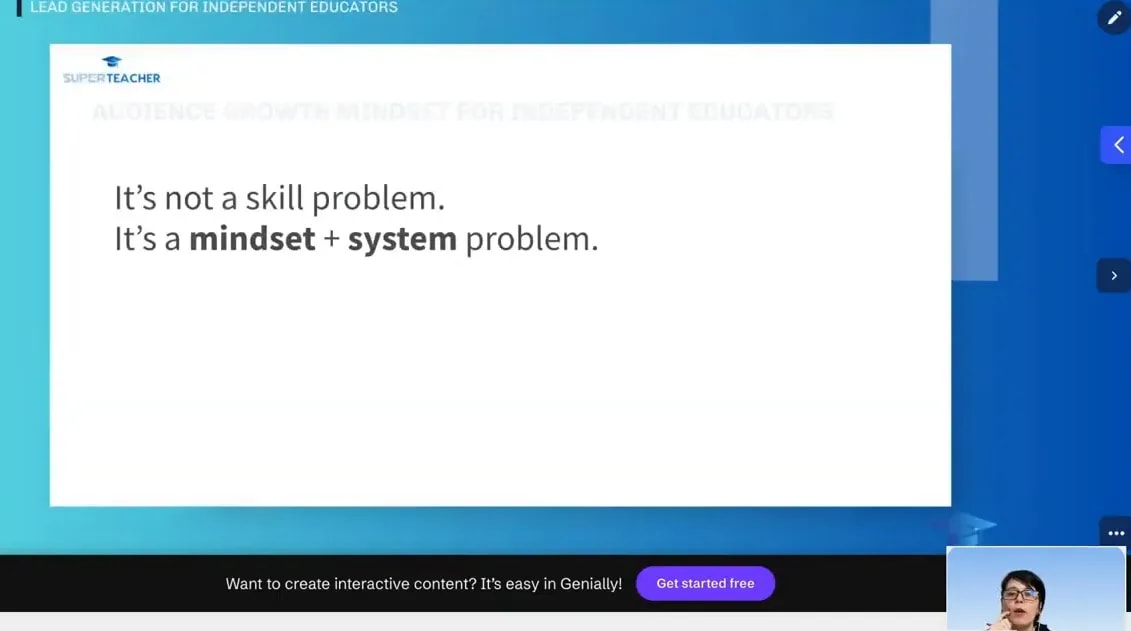
Usually, none of those are the real issue.
The issue is that many excellent teachers are still operating in survival mode. They are stuck in the cycle of:
- I need to find the next student.
- I need to post something.
- I need to hope this works.
- I need to scramble again when a student leaves.
That is not growth. That is reacting.
A teacher mindset focuses on doing the work well in the moment. A business mindset asks different questions:
- How do students find me consistently?
- How do I stay visible over time?
- What system produces student flow?
- What in my business is predictable?
That is the core shift.
Teacher mindset vs business mindset
Teacher mindset
- Deliver a good lesson
- Help the student in front of you
- React to platform rules, campaigns, and availability
- Stay busy in the moment
- Build more materials before selling
Business mindset
- Set measurable goals
- Create a clear offer
- Build visibility intentionally
- Design a conversion path
- Track what works
- Create repeatable weekly systems
You do not need to become some aggressive marketer. You do not need growth hacks. You do not need to suddenly act like a startup founder.
You just need to stop assuming that good teaching will automatically create discovery.
It does not.
Good teaching matters once someone is already in your world. Before that, clarity, visibility, and follow-through matter just as much.
You probably already have enough to start
This is the part many teachers need to hear.
You probably do not need 13 more videos, 26 more worksheets, a whole course library, and a perfect website before you start growing independently.
You likely already have enough.
If you are experienced enough to teach independently, then you already have something valuable. What you need now is not more content. You need a clearer plan for how your existing value gets seen and understood.
If you want help tightening your positioning, this guide on finding your niche as an independent educator is a very natural next step.
What a business mindset looks like in practice
Here are the practical building blocks.
1. A clear, measurable goal
Not “I want more students.”
Think instead:
- I want 5 new students this month.
- I want to reactivate 3 inactive students before summer.
- I want to move part of my private student base into group classes.
- I want to reach a target income by a specific date.
Once you have the number, you can plan backward from it.
2. A visibility system
Visibility is not random posting whenever you happen to have energy.
It is a simple, repeatable plan:
- I show up this many times each week.
- I talk about these specific topics repeatedly.
- I stay focused on the same core message.
- I show people the same offer in a clear way over time.
Consistency matters because people remember patterns. If your content is all over the place, your audience never learns what to expect from you.
If you teach pronunciation, talk about pronunciation. If you teach IELTS, keep reinforcing that. If your niche is confidence for young learners, do not bury it under ten unrelated messages.
The goal is not to sound broad. The goal is to be memorable.
3. A conversion path
What happens after someone sees your content?
This is where many independent teachers have friction without realizing it.
Examples of friction:
- No clear contact method
- Contact method does not match the audience
- No booking option
- Offer is hard to understand
- Student has to ask too many questions before taking action
- Important links or QR codes are missing
If your audience is mobile-first, give them a QR code. If your audience uses WeChat, make that easy. If your students book online, test the booking flow yourself. If you sell packages, make sure the package is visible and available.
A student should not need a long explanation to understand what to do next.
4. Feedback from data, not just feelings
It is easy to say:
- This content did not work.
- No one is interested.
- I posted and nothing happened.
But what do the numbers actually say?
What content got attention? Which offer converts best? What kind of promotion worked? Which package do parents renew most often? Which audience responds to referrals? Which platform brings actual action, not just likes?
Business thinking removes guessing.
5. A weekly operating system
This can be very small. It does not need to be fancy.
For many independent educators, a strong weekly system looks like this:
- One clear offer
- One or two marketing channels
- One lead collection point
- One recurring content rhythm
- One referral habit
That is enough to build momentum.
Why visibility alone is not enough
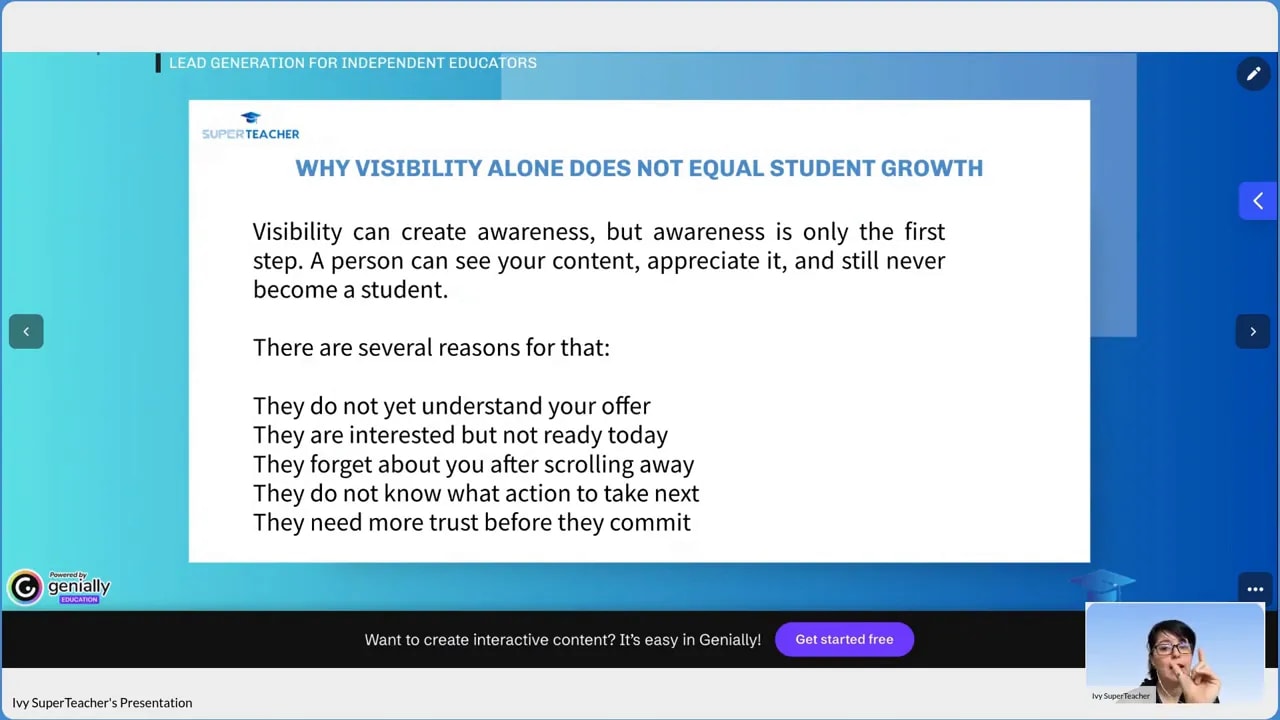
A lot of teachers chase visibility as if visibility itself is the win.mVisibility creates awareness. Awareness is just the top of the funnel.
Someone can see your content and still never become a student because:
- they did not understand the offer quickly enough
- they were interested but not ready that day
- they forgot about you after scrolling away
- they did not know what action to take next
- they needed more trust first
This is especially important when you work with referral-heavy communities. Some audiences are not persuaded by self-promotion. They want social proof. They want to hear from another parent. They want to see a quote, a recommendation, a quick testimonial, or a familiar format.
For some markets, trust matters more than sparkle.
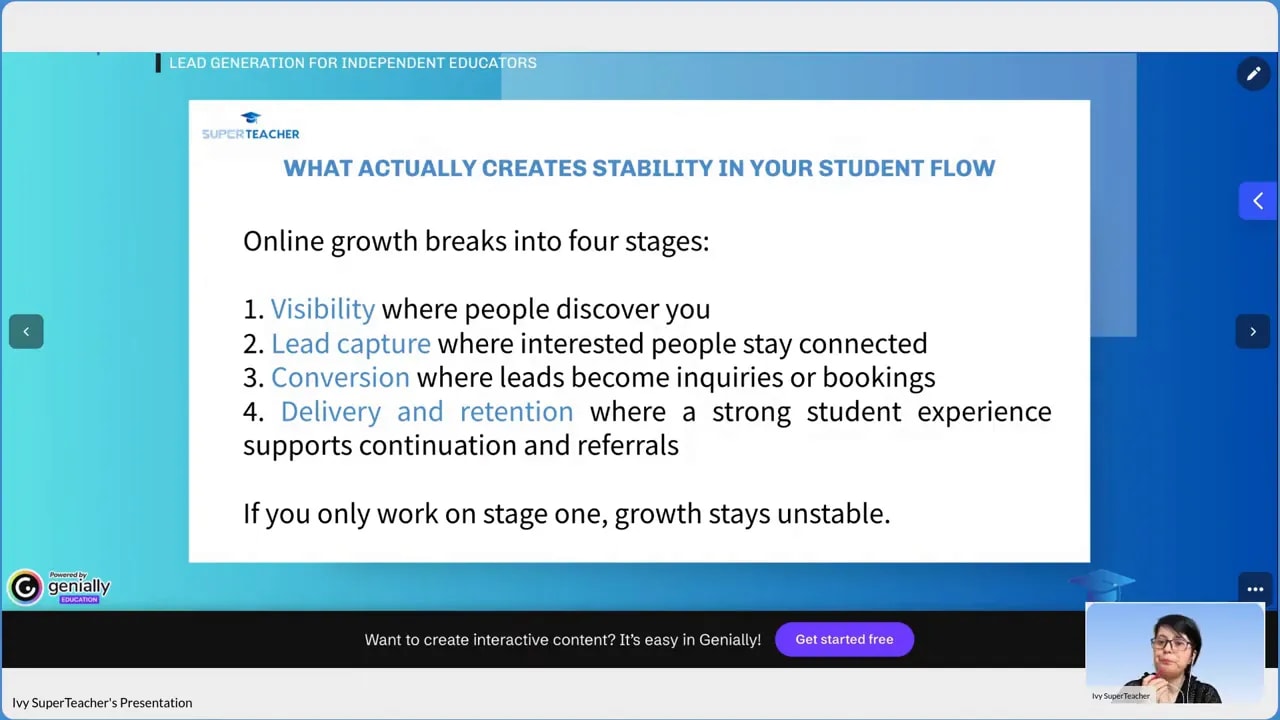
Understand the numbers so marketing feels less personal
One of the most useful mindset shifts is realizing that conversion rates are usually lower than you expect.
That is not because you are doing badly. That is simply how marketing works.
A rough example shared in the session was this:
- Out of 1,000 people who see your content, around 2% – 5% might show initial interest.
- Of those interested people, only ~10% will convert.
That means you should stop interpreting every non-response as failure. Instead, use reverse planning. If your goal is 5 new students, ask:
- How many leads do I likely need?
- How many people need to see my offer?
- How can referrals improve those odds?
Referral marketing is often much stronger than cold social reach because trust is already built in. If you have even a handful of happy students or parents, that is not a minor asset. That is one of your strongest growth channels.
Referral marketing works best when you remove the work for people
This is such an important practical point.
Your students and parents may love you, but they are busy. They usually do not have time to sit down and create the perfect referral message for you.
So do it for them.
Create the message. Create the flyer. Add the QR code. Add the contact. Make it easy to forward.
The more you prepare for them, the more likely they are to share it.
This is a perfect example of business mindset. Do not just hope people refer you. Build the referral path for them.
The seven-second test
Attention spans are brutally short. Seven seconds. That is about how long you have to help someone understand what they are looking at and what they should do next. So ask yourself:
- Can someone understand my offer fast?
- Can they see who it is for?
- Can they find my contact details immediately?
- Can they tell what happens next?
Often, people are not deeply reading. They are scanning visually, looking for the contact, the promise, the proof, or the next step. Design for that reality.
You may not need a website as much as you think
This one surprises a lot of teachers.
A website can be useful, but a website by itself usually does not generate traffic unless it has a consistent content engine behind it, such as a blog that supports SEO over time.
For many small independent teaching businesses, the website is not the growth engine. It is more like the place you send people after they discover you somewhere else. What you need is a simple but very effective user-friendly landing page, like SuperTeacher educators page, that has everything you need to capture leads, sell and onboard students, and manage your independent educator’s business. If your current focus is marketing, clarity, and student flow, make sure those come before perfectionism about your site.
Create a lead magnet, not just an offer
Your class offer is not automatically a lead magnet. If your offer has a price tag, it is an offer. A lead magnet is something free that helps people enter your world. Depending on what you teach, your lead magnet could be:
- a class recording
- a sample worksheet
- a sample product
- a game
- a class snippet
- a short teaching video
- a free demo lesson
What matters is that it fits your audience and clearly represents your teaching.
Use your inactive students before chasing strangers
One of the most practical reminders in the session was this: some of your next students may already be in your world. Before obsessing over brand new leads, check:
- Which students became inactive?
- Who took a break?
- Who said they were busy and never came back?
- Who still likes your teaching but simply dropped off?
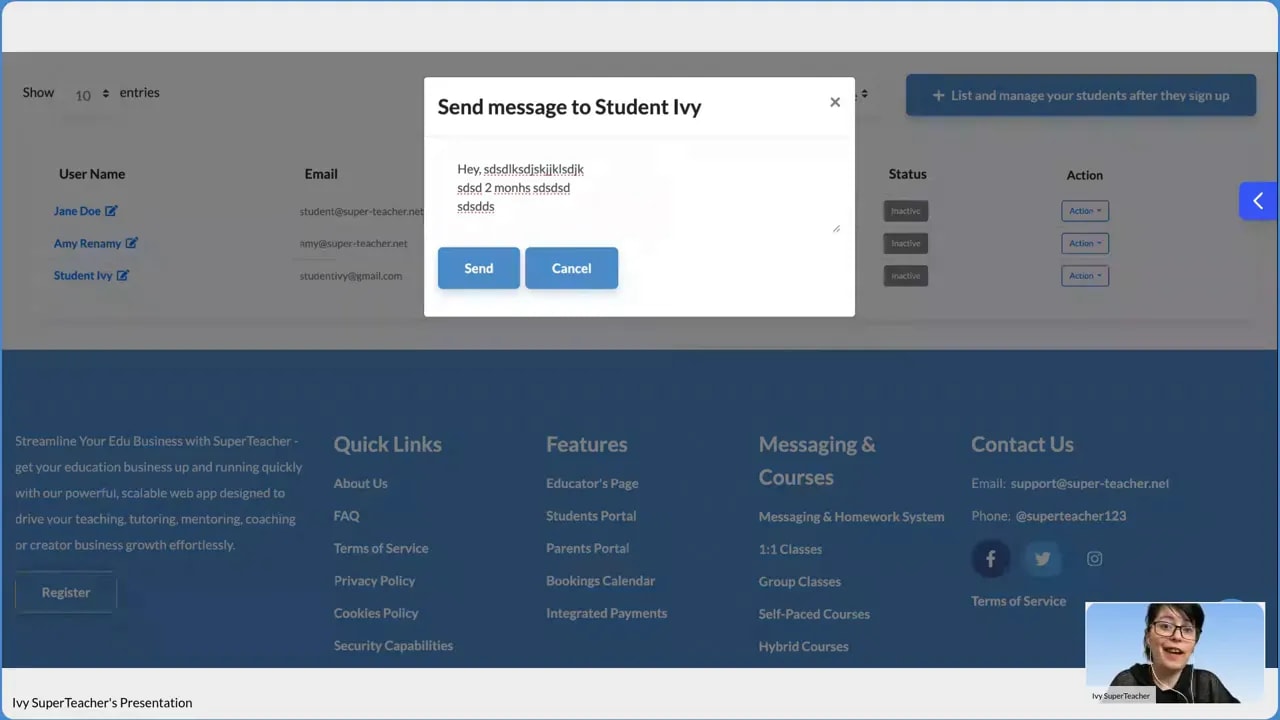
A simple follow-up can go a long way. With SuperTeacher you can message them, check in, and even make reactivation easier by offering something small like a gifted class credit or a very clear next step. That is not pushy. That is smart relationship-based business. You are not always starting from zero.
Pricing should support your business, not just your feelings
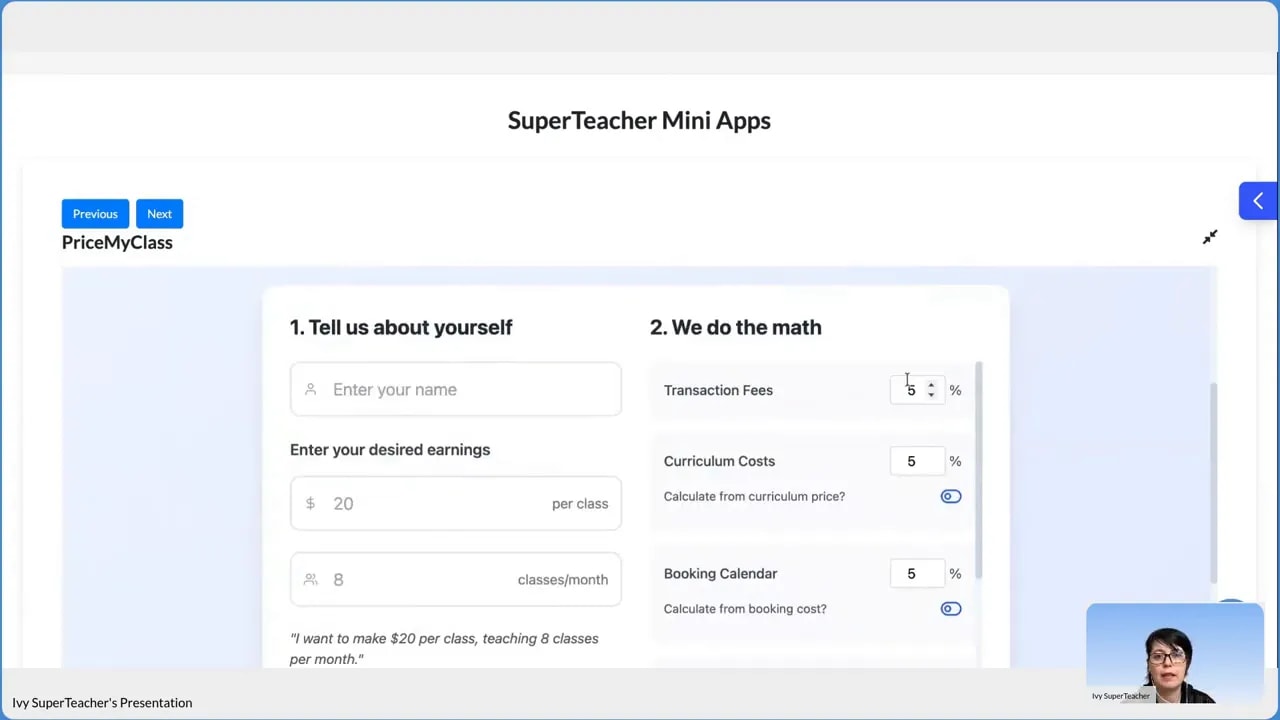
Pricing is where many teachers undercharge because they only think about what they would like to earn, not what the business actually costs to run.
Your class price needs to account for things like:
- transaction fees
- curriculum costs
- calendar tools
- classroom tools
- subscriptions
- other business expenses
If you want to earn a certain amount per class net, you have to calculate the real price accordingly. That is exactly why tools like PriceMyClass and PlanMyGrowth are useful. They help you stop guessing and start pricing from actual business reality.
Repurpose instead of constantly creating from scratch
If time is your bottleneck, do not build a growth plan that depends on endless fresh creation. Repurpose. For example, if you record a longer teaching video or go live, you can turn that into shorter clips for social media. That is one piece of work creating multiple content assets.
This matters especially for busy teachers, caregivers, and anyone juggling teaching with real life. Your system should fit your actual capacity. One consistent hour each week can be more powerful than random bursts of content followed by silence.
If you are using SuperTeacher, use it fully
Many teachers sign up for tools but do not fully use what is already there. If you want one place to manage offers, bookings, payouts, products, students, messages, and planning, it helps to actually spend time learning the system you already have. That includes things like:
- keeping your offer updated
- testing your booking flow as a student
- checking inactive students
- using notes and tags
- sending messages directly
- assigning credits or gifts when appropriate
- learning how your payment setup works
If you are still setting up your independent teaching system, you can register for a free SuperTeacher account and choose a plan later.
And if you want the platform walkthroughs and tutorials gathered in one place, the teacher guides section is especially useful.
Common mistakes to avoid
- Assuming good teaching automatically creates demand. It does not.
- Thinking visibility is the goal. Visibility without conversion is just noise.
- Posting inconsistently and hoping for spikes. Systems beat bursts.
- Trying to grow without a lead strategy. People need a next step.
- Focusing on output instead of conversion. More content is not always better.
- Delaying action until everything is perfect. Sell the idea, then improve as you go.
- Ignoring warm leads. Some of your easiest wins may already know you.
What to do next
If you feel scattered, do not try to fix everything at once. Pick one concrete goal. Then ask:
- What exactly do I want to achieve?
- By when?
- How will I measure it?
- What is the simplest path toward it?
- What can I do this week?
That one shift alone moves you out of teacher survival mode and into business growth mode. You do not need hundreds of students to begin with. You do not need millions of views. You do not need to become someone else. You need clarity, consistency, and a system with less friction. That is how audience growth starts to feel realistic for independent educators.
Sign up with SuperTeacher
Register for free, pick the right plan later

Leave a Reply