You post on Facebook. You share on Instagram. You make a flyer. A parent asks a question. Someone downloads your free resource. Maybe a referral comes in.
And then… nothing.
That gap is where many teachers get stuck. Not because they are bad at teaching, and not because their offer is weak, but because attention on its own does not create students. What creates students is a clear journey.
If you are moving from simply teaching independently to actually running an educational business, this is one of the biggest mindset shifts to make. You do not need a complicated marketing machine. You do not need fancy funnels or advanced automation. You do need a simple system that helps people move from noticing you to trusting you to eventually learning with you.
Why attention alone is not enough
Referrals are great. Social media can work. Marketplace platforms can help. Blog posts, webinars, live workshops, and short-form content all have their place.
But none of those things automatically turn into enrollments.
People usually need:
- Repetition so they remember you
- Trust so they feel safe choosing you
- Structure so they know what to do next
- A clear next step that feels easy and natural
Without a system, attention becomes lost visibility. Someone sees your post once, maybe likes it, maybe even clicks, and then disappears.
With a system, attention becomes a relationship. And relationships are what eventually create students.
The simple funnel logic for educators
You do not have to get overly businessy about this. A funnel is simply the journey someone takes from first noticing you to becoming a paying student or client.
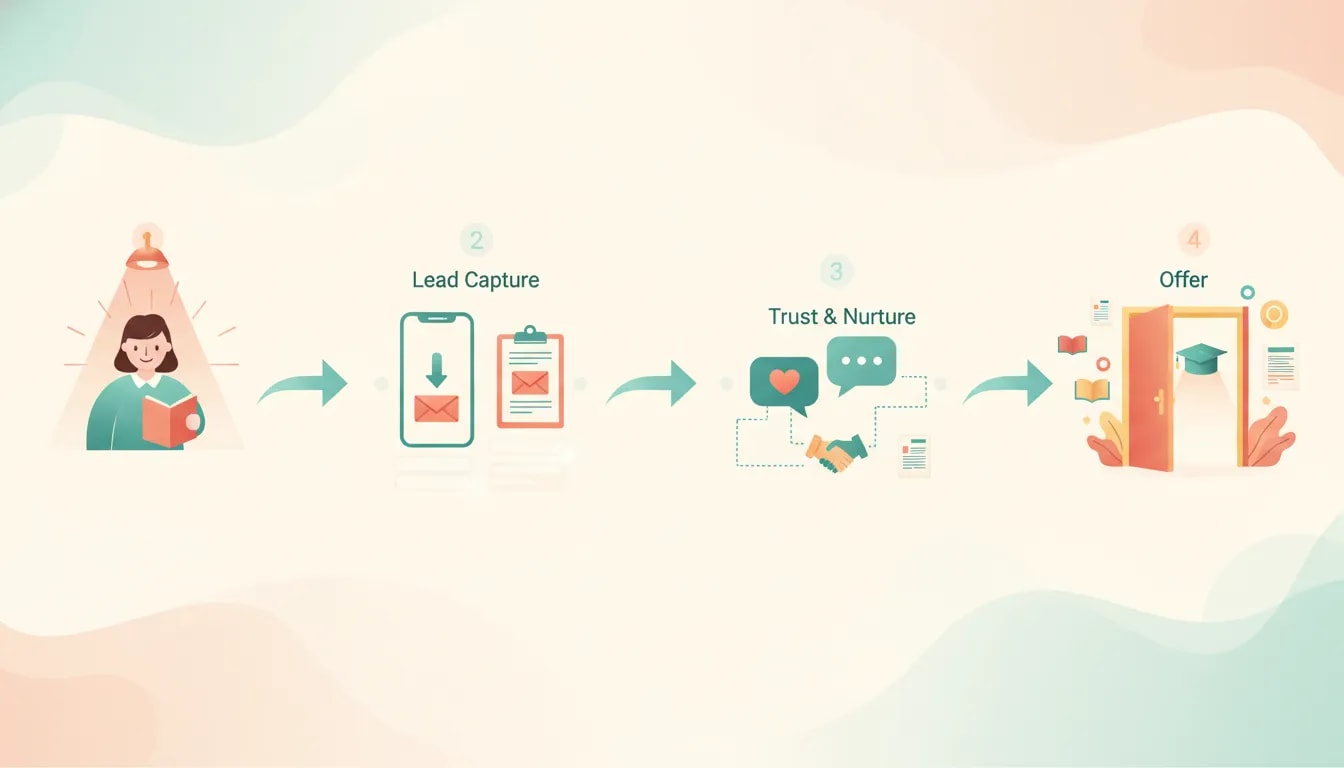
For independent teachers, tutors, coaches, and mentors, that journey can be broken into four very practical stages:
- Attention: someone discovers you
- Lead capture: they take a small step and share their contact info
- Nurture and trust-building: you stay connected and deepen the relationship
- Offer: you invite them into a paid class, program, product, or longer-term learning path
That is it. Simple, clear, manageable.
Step 1: Create attention with consistent content
The first stage is visibility. People need a way to find you.
That might happen through:
- Social media posts
- Referral marketing
- Blog content
- Webinars or live events
- Marketplace profiles
- Community groups
At this stage, people are only noticing you. That matters, but it is still just the beginning.
One of the most common problems here is inconsistency. Teachers often say they have been posting three times a week and not seeing results, but when you ask how long they have been doing it, the answer is often two weeks.
Organic marketing takes time. Consistency matters more than perfection. The content itself does not need to be overly polished or heavily edited. Short, useful posts can work extremely well. What matters is posting regularly enough for platforms and people to start recognizing what you do.
If your niche is phonics, keep your content focused on phonics. Talk about the same topic from different angles. Use videos, images, games, worksheets, examples, tips, and mini demonstrations. That consistency helps both your audience and the algorithm understand what you are about.
Useful social platforms by region
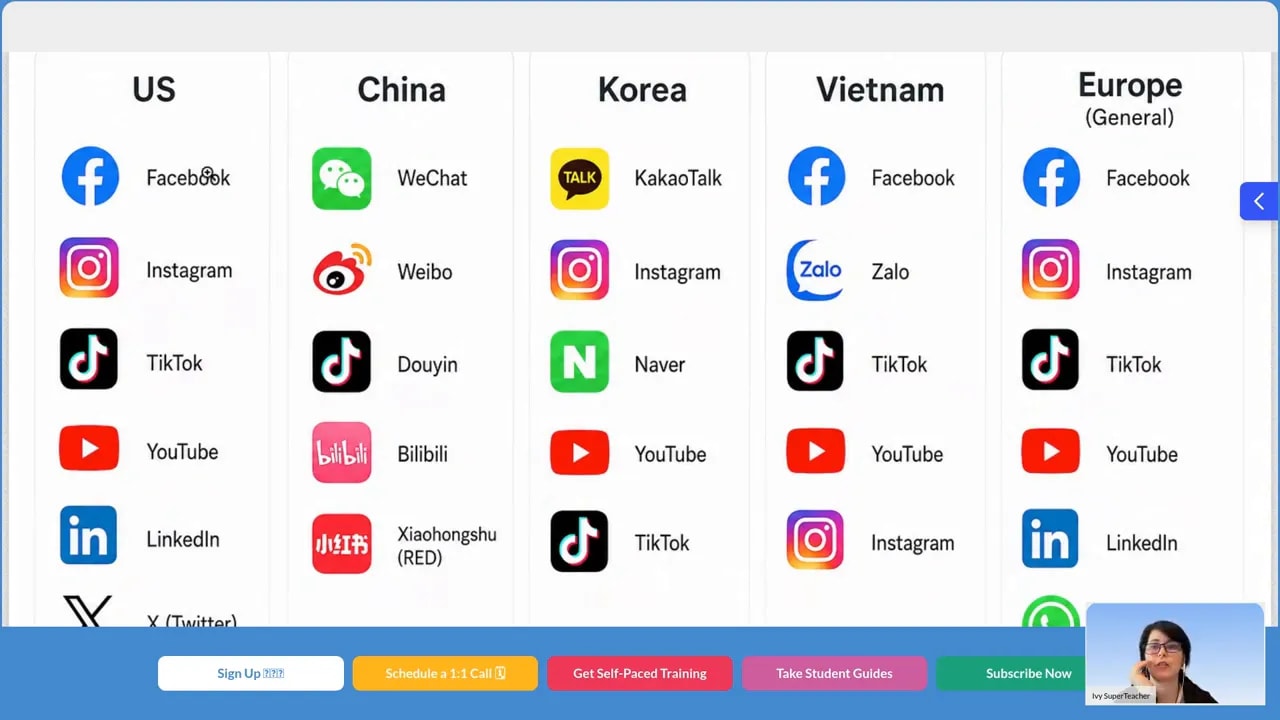
If you teach internationally, the best platform may depend on where your students or parents are.
- US and many Western markets: Facebook, Instagram, TikTok, YouTube, LinkedIn, X
- China: WeChat, Weibo, Douyin, Bilibili, Xiaohongshu
- Korea: KakaoTalk, Instagram, Naver
- Vietnam: Facebook, Zalo, TikTok, YouTube, Instagram
- Europe: most of the common global platforms work well
And if you are marketing to mobile-first audiences, especially in many Asian markets, QR codes matter. They make it much easier for someone to move from seeing your flyer or post to taking action. If you want to set that up cleanly, this guide on creating a QR code for your SuperTeacher page is a practical place to start.
Step 2: Every visibility effort needs a next step
This is where many educators unintentionally lose people.
They post useful content. They share a flyer. They get some interest. But there is no clear path forward.
Every post does not need to sell. But your overall ecosystem should guide people somewhere.
That means your content should answer this question clearly:
If someone wants more help from me, what should they do next?
That next step is often a call to action, or CTA.
Examples include:
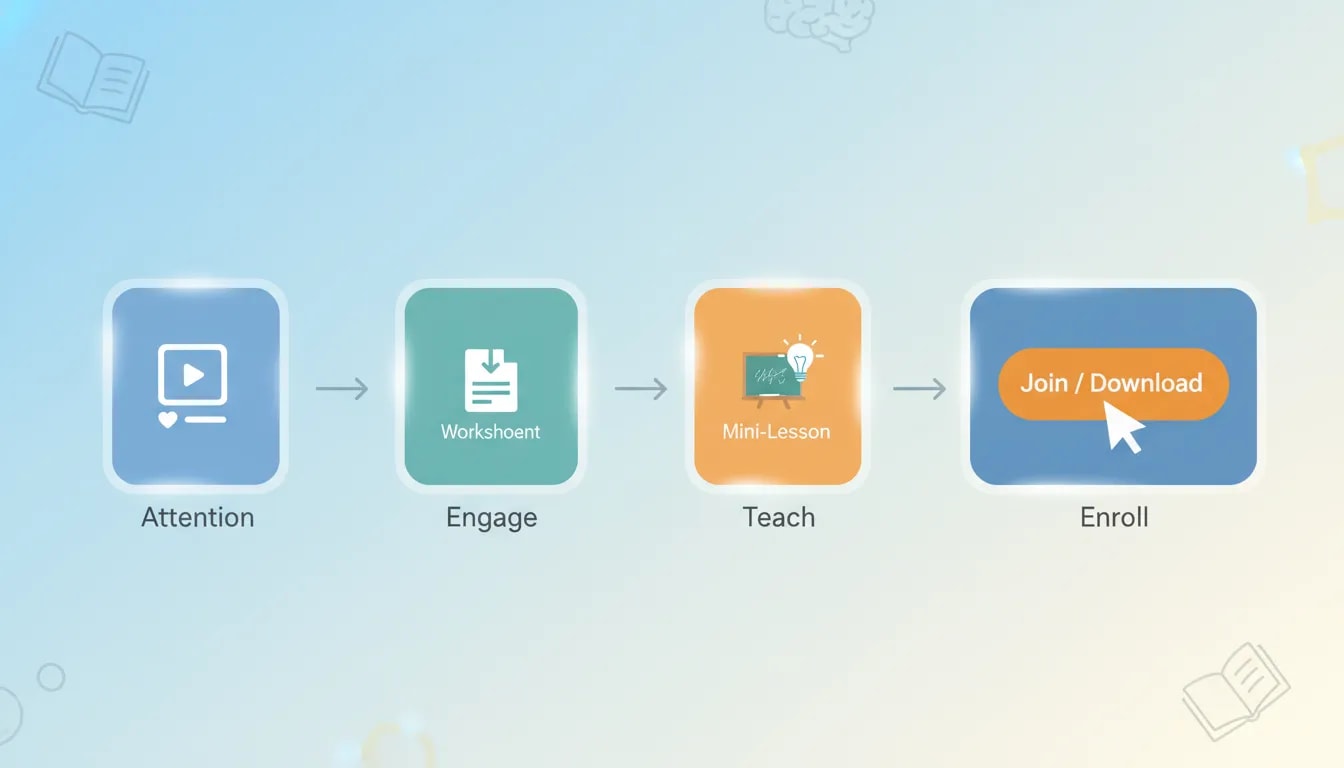
- Download a free worksheet
- Join a free mini lesson
- Book a free trial class
- Join a one-time group class
- Register for a parent webinar
- Get a checklist, game, challenge, or guide
The point is not to push. The point is to make it easy for interested people to stay connected.
Step 3: Use a lead magnet to turn attention into a lead
A lead magnet is a free resource that gives someone a quick win and a taste of what you do.
It should be:
- Useful
- Specific
- Easy to access
- Connected to your main offer
If you teach one-to-one classes, your lead magnet does not need to be huge. In fact, smaller and more focused is often better.
Good examples include:
- A worksheet on one phonics sound
- A short grammar game
- A pronunciation checklist
- A mini lesson or recorded sample class
- A challenge for parents and children
- A webinar for parents
- A free seat in a one-time group class
Think tiny but powerful. Instead of trying to teach everything, solve one small but meaningful problem.
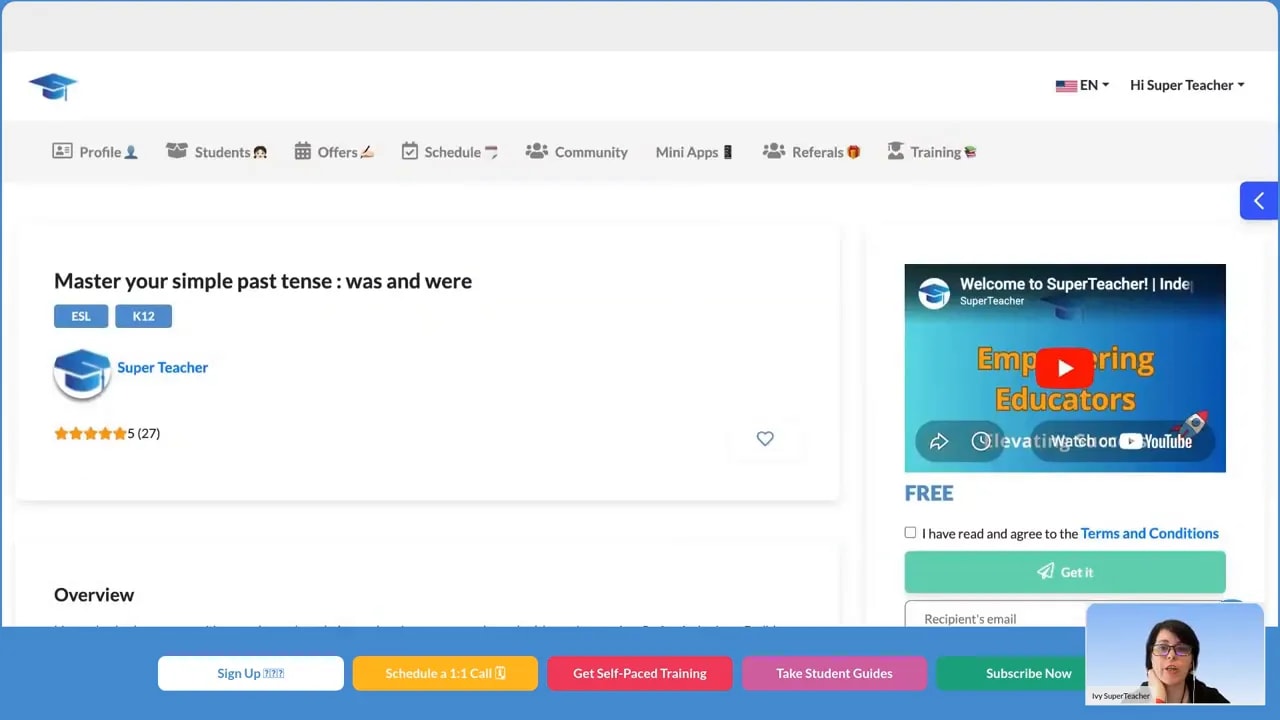
For example, a grammar lead magnet might be something as focused as master your simple past tense: was and were. That is clear, useful, and easy for a parent or learner to understand.
The key rule: free does not mean anonymous
Your free resource should not just float out into the world with no connection back to you.
It should be behind a sign-up step so the person exchanges contact information for access.
They are not paying with money, but they are paying with their email or registration. That is what turns attention into an actual lead.
If you are using SuperTeacher, you can do this in a few different ways:
- Offer a free class directly
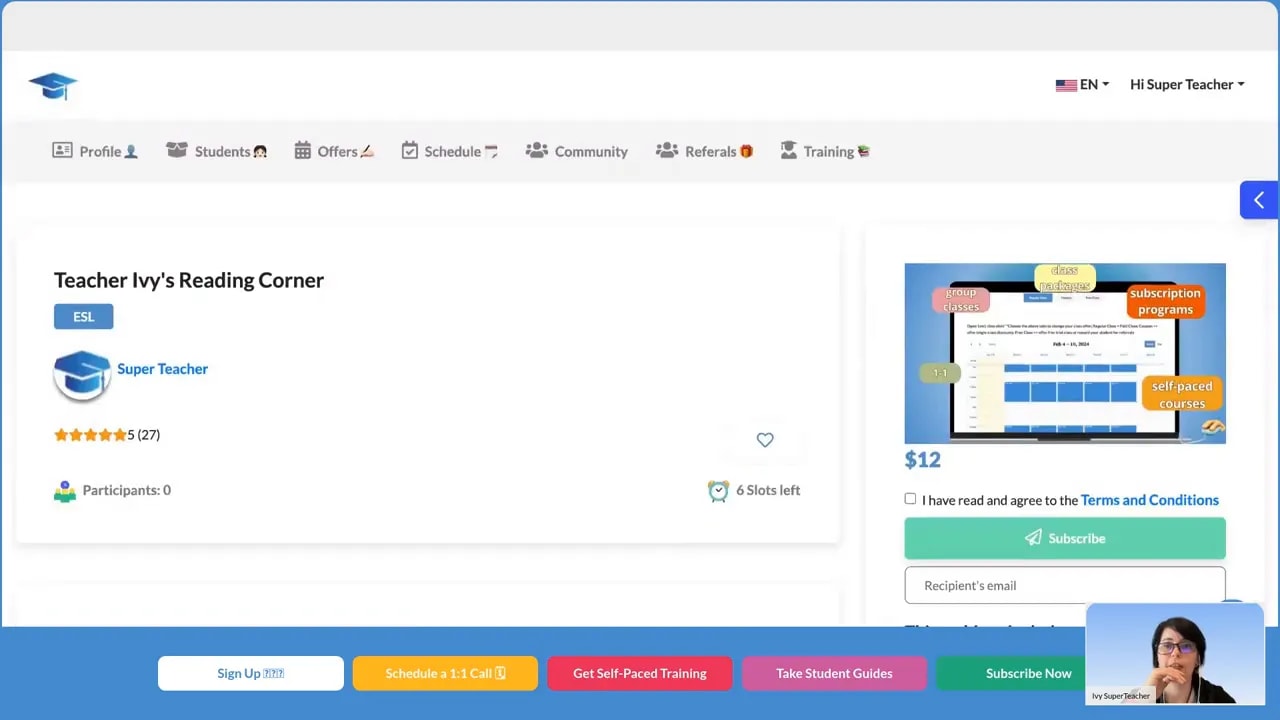
- Create a paid class and use a 100% off coupon
- Offer a free seat in a group class
- Share a digital product such as a worksheet, game, or mini course
If you are new and want to explore that setup, you can register for SuperTeacher and choose the right plan later.
Why free group classes can be a brilliant lead magnet
One especially useful idea is offering a free seat in a group class.
That works well for a few reasons:
- It gives people a real experience of your teaching
- It feels high value
- It lowers pressure because it is not a one-to-one commitment yet
- It can introduce students to your style before you invite them into private learning
- People can sometimes join with a friend, which reduces hesitation
Even if your real goal is to sell one-to-one classes, a one-time group class can be a very smart bridge.
And if you are dealing with people who love free sessions but never commit, it helps to have clear boundaries around how and when to offer those opportunities. This piece on trial hoppers and window shoppers gives a helpful framework for that.
Step 4: What happens after someone joins your list?
This is the step that matters most.
Someone downloads your freebie. Great. Someone takes your free class. Great. Someone joins your email list. Great.
Now what?
This is the point where many educators go silent. They wait for the parent or student to come back and say they want lessons.
But once someone has taken your free resource, that is not the moment to disappear. That is the moment to begin building the relationship.
You do not need to become pushy. You do need to be proactive.
What nurturing actually means
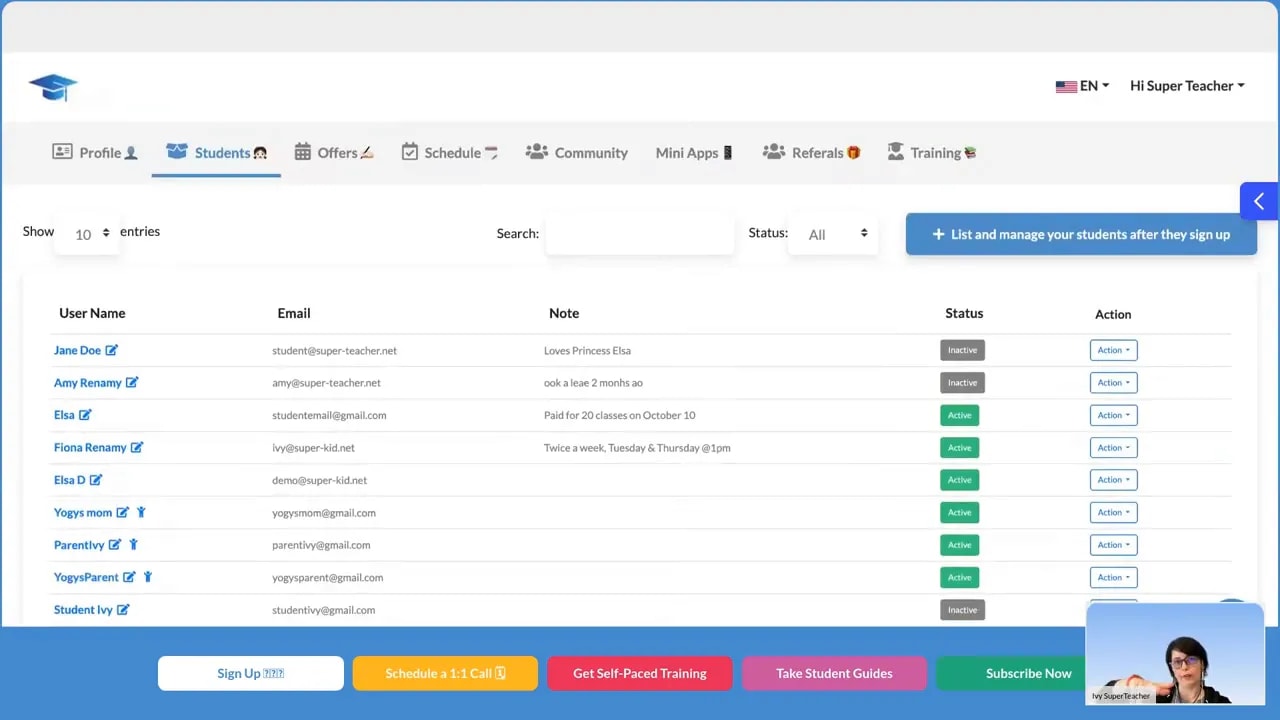
Nurturing is simply staying in touch in a helpful, genuine way.
That might look like:
- Sending a thank-you message
- Asking whether they found the resource useful
- Inviting them to tell you more about their learning goals
- Sharing another useful tip related to the topic they showed interest in
- Offering a class invitation when the timing feels natural
You are not trying to force a sale. You are trying to build familiarity, trust, and momentum.
A simple follow-up message that works
If someone downloads your free resource, a strong next message could be as simple as:
- Thank you for signing up
- Ask if they found it useful
- Ask one question about the learner or their goals
That question matters because it opens a real conversation.
If the parent replies and says, for example, “My child is seven, very shy, and needs help speaking English,” you now know something important. You can tailor your next step based on a real need instead of guessing.
That is when marketing starts feeling less like marketing and more like teaching.
What to send instead of random sales messages
You do not need daily emails. You do not need a long automated campaign. But you do need some kind of plan.
For example, you might decide that twice a week you will follow up with active leads and share something useful connected to what they already showed interest in.
That content could include:
- Practical teaching tips
- Short educational insights
- Useful resources
- Workshop invitations
- Success stories
- Reminders
- Learning encouragement
- Common student mistakes
- Mini lessons
- Behind-the-scenes moments from your teaching
The good news is you do not need to invent these from scratch. Most of them can come directly from your day-to-day teaching experience.
If you taught in schools, worked on platforms, ran private lessons, or supported specific age groups or subjects, you already have plenty of material to draw from.
How to respond when parents ask only for your prices
This comes up all the time, and it is easy to feel boxed in by it.
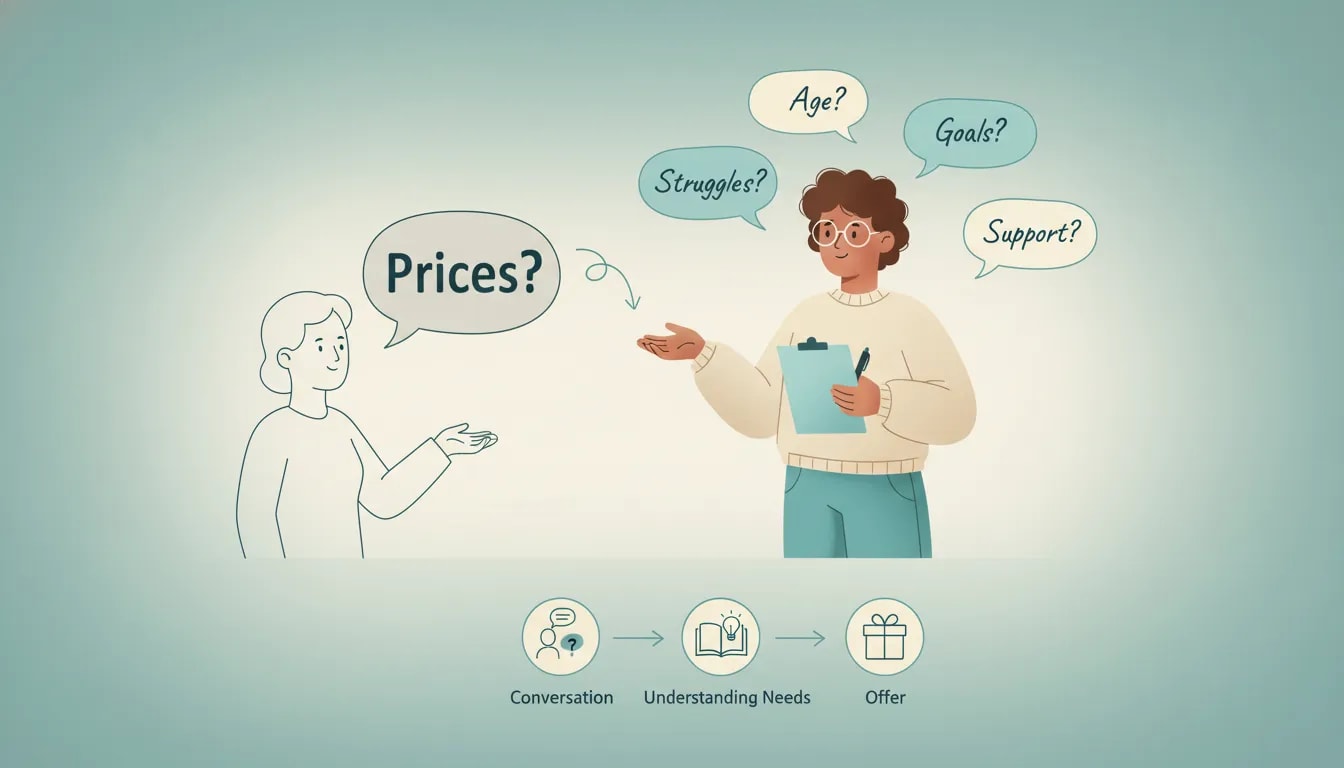
A parent reaches out and asks, “What are your prices?”
You do not have to answer in the exact format they ask.
You are running the business, which means you are allowed to lead the process.
Instead of immediately listing prices, you can reply by learning more first:
- What is your child’s age?
- What are they struggling with?
- What are your goals for them?
- What kind of support are you looking for?
When you show genuine interest in the student and identify a real pain point, you are already doing half the work needed to help them make a decision.
That does not mean hiding your prices. It means giving context before the price conversation so your offer makes sense.
How to avoid content without conversion
One of the biggest traps in independent teaching is staying busy without building a path.
You keep creating content. You keep sharing. You keep making things. But there is no conversion because there is no clear next step and no follow-up.
To fix that, remember these two principles:
- Not every piece of content needs to sell
- Your overall system should always guide people somewhere
And usually, one place is better than six.
Too many communication channels can make things confusing fast, especially if you teach students or parents who are already navigating a second language. Simplicity wins.
Use fewer paths, clearer calls to action, and more visual guidance.
Shift from teacher mindset to business mindset
This does not mean becoming cold, corporate, or salesy.
It means becoming intentional.
The teacher mindset often says:
- Teaching well should be enough
- I will post only when I need more students
- I will wait and see who replies
The business mindset says:
- I need a clear, measurable goal
- I need a visibility system
- I need a conversion path
- I need to follow what works using data, not just emotion
- I need a weekly operating rhythm
That might mean knowing:
- How many students you actually want each month
- How many leads you can realistically handle each week
- How many free seats or trial offers your schedule can support
- Which content types bring interest
- What percentage of leads usually convert for you
Without those numbers, it is hard to know whether your efforts are working.
Consistency matters more than perfection
This came up again and again for a reason.
If you rely on bursts of effort only when income dips or a few students leave, your marketing will always feel stressful and reactive.
A better approach is to keep your visibility and follow-up system running regularly, even in a light way.
That could mean:
- Posting regularly
- Sharing one lead magnet consistently
- Following up with interested contacts each week
- Reviewing what worked and what did not
The goal is not to do everything. The goal is to stop doing everything randomly.
Tools that can help you stay organized
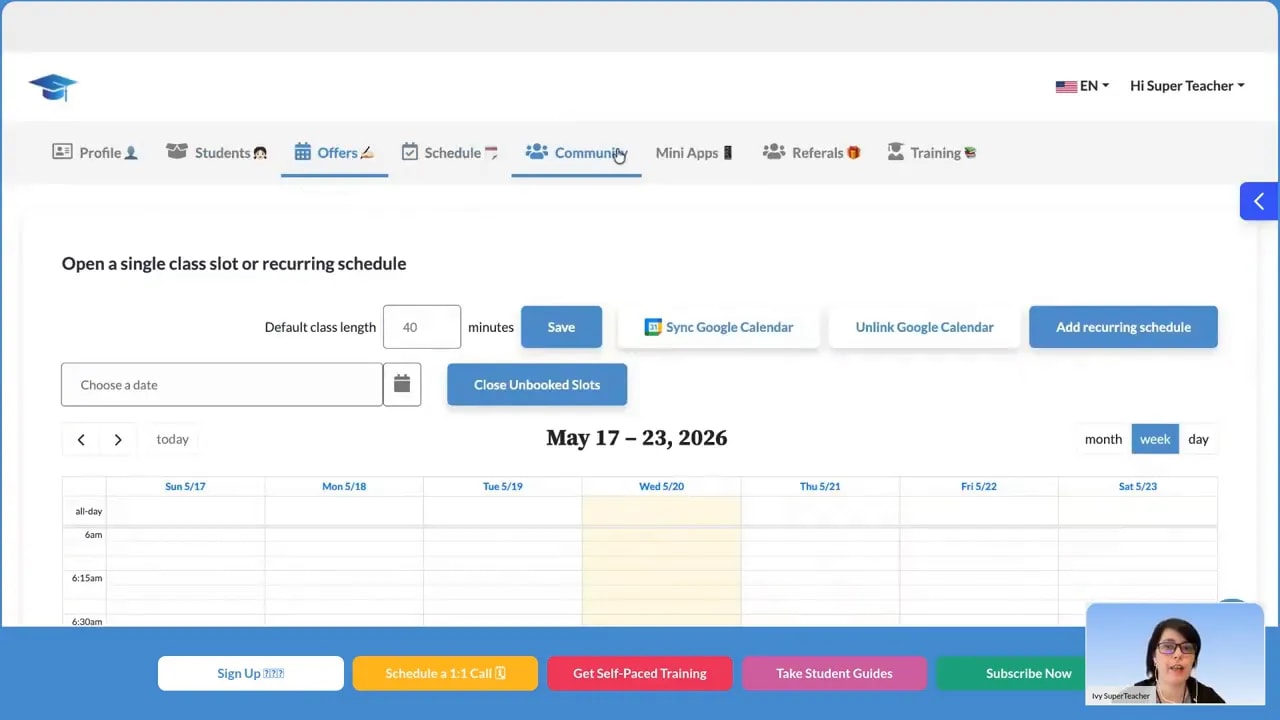
For teachers using SuperTeacher, there are a few built-in tools and mini apps that support this kind of structure.
These include tools for:
- Creating terms and conditions
- Planning class pricing
- Designing a simple flyer for self-marketing
- Building a weekly or monthly growth plan
If you want an overview of what these tools are designed to do, the introduction to SuperTeacher Mini Apps is a good reference point.
A practical student journey you can use
Here is a simple example of what a smoother journey could look like:
- You post a short phonics tip on social media
- The post includes a CTA to download a free worksheet or join a free class
- The parent signs up and joins your list
- You send a thank-you message and ask one question about their child’s needs
- You follow up with one or two useful tips or resources
- You offer a free seat in a group class or a trial class
- You continue the conversation based on the child’s goals
- You invite them into your paid offer when the timing is natural
Nothing about that is aggressive. It is simply thoughtful, clear, and supportive.
The real goal is not more content. It is a better system.
If there is one takeaway to hold onto, it is this:
Content creates attention, but systems create students.
You do not need to post endlessly. You do not need complicated funnels. You do not need to become a full-time marketer.
You need a clear path that helps people move through your ecosystem one step at a time.
When that path is in place, your flyers, referrals, reels, workshops, and free resources stop being isolated efforts. They start working together.
And that is when independent teaching begins to feel less chaotic and much more sustainable.
Sign up with SuperTeacher
Register for free, pick the right plan later
Leave a Reply