
Wondering how to run an online group lesson so every student gets the speaking time they need, without spending the whole class calling on students?
In a small group, it is easy for a confident student to answer first while someone quieter waits for an invitation. A little structure can make participation feel much more natural. Give everyone a clear task, a moment to prepare, and a predictable way to take a turn.
These five activities work for independent online educators teaching children or adults. They are especially useful for ESL lessons, but you can adapt the ideas to almost any tutoring subject.
What You’ll Learn
- Turn poll answers into speaking opportunities by asking every student to explain their choice.
- Use paired role plays and shared stories to give students clear reasons to speak and listen.
- Combine preparation time, timed turns, and randomized order to make participation fairer.
1. Vote, Then Explain
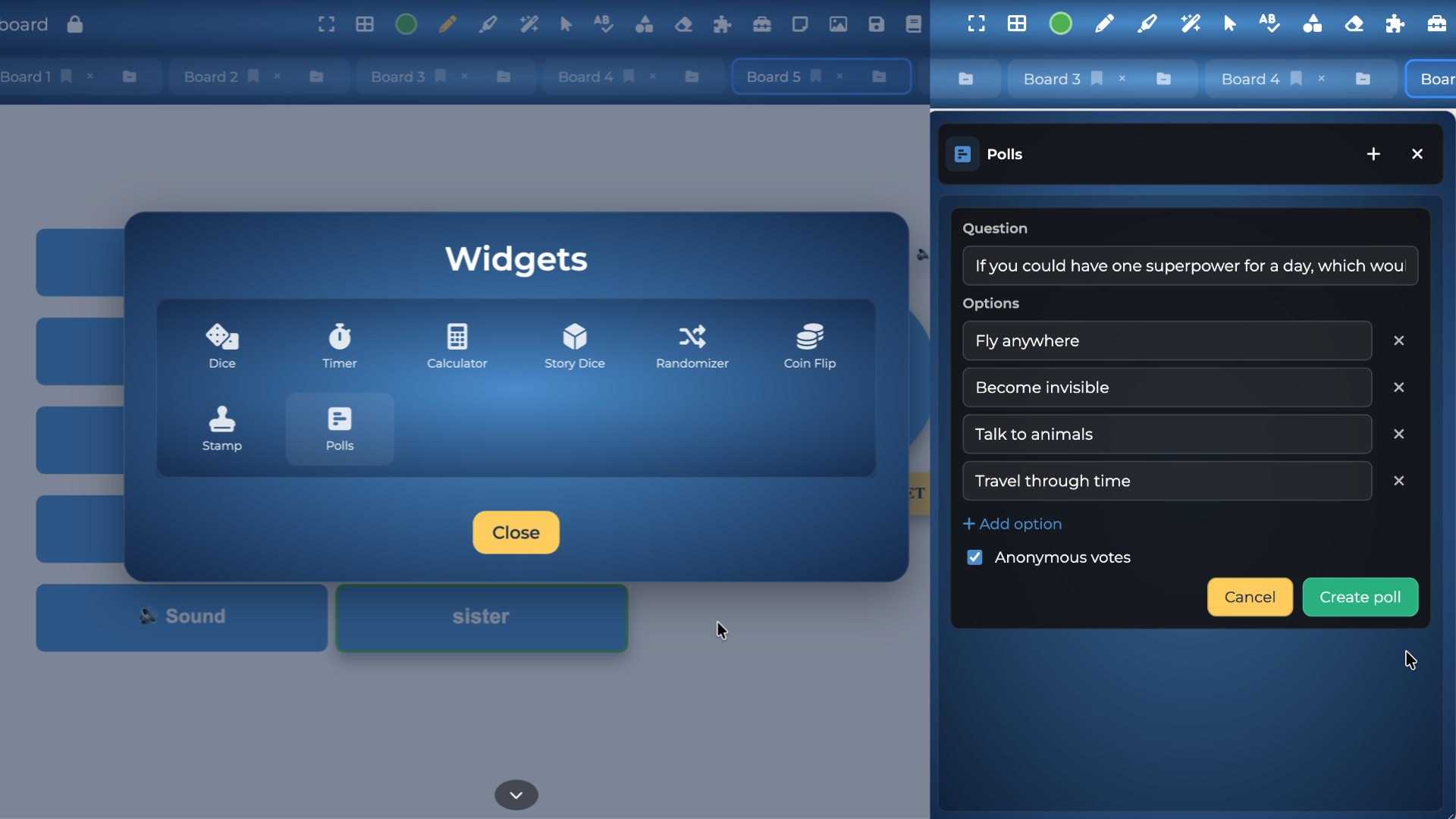
A poll gives everyone a simple first step: choose an answer. Then you can turn that choice into a short speaking opportunity.
For an ESL warm-up, try a question such as, “Which would you prefer for a day off: the beach, the mountains, or the city?” Once everyone has voted, ask each student to explain their choice in one or two sentences.
You can also use a poll to check comprehension. Ask students to choose the best answer to a question about the lesson, then explain what helped them decide.
- Show the question and answer options.
- Give everyone a moment to vote before discussing the results.
- Invite each student to explain their answer.
- Use their explanations to decide what needs another look.
The useful part is the explanation, not just the vote. Everyone has already made a choice, so nobody has to start speaking from a completely blank page.
In SuperTeacher Classroom, the Polls widget lets you run the vote in your lesson. You can also make it anonymous. That gives students a lower-pressure way to commit to an answer before you invite them to talk through their thinking.
2. Put Students in Pairs for a Role Play
Role play gives students a reason to speak and a clear idea of what to say. Instead of asking them to “have a conversation,” give each person a role and a small task to complete.
For example, one student could be a customer ordering food while another takes the order. Use the vocabulary or sentence patterns from your lesson, then switch roles so both students practice both sides of the exchange.
Keep the setup simple:
- Assign the roles: Make sure each student knows who they are.
- Set the goal: Explain what the pair needs to accomplish.
- Give preparation time: Let students think through the language they need.
- Switch: Swap roles or partners as class time allows.
In SuperTeacher Classroom, you can pop students’ videos into floating mode and position them alongside the lesson activity. This brings the speakers into the activity itself and helps keep attention on the exchange.
If one pair is speaking at a time, give the others something specific to listen for. They might check whether the customer received the correct order, for example. Waiting for a turn does not have to mean switching off.
3. Give Everyone Thirty Seconds
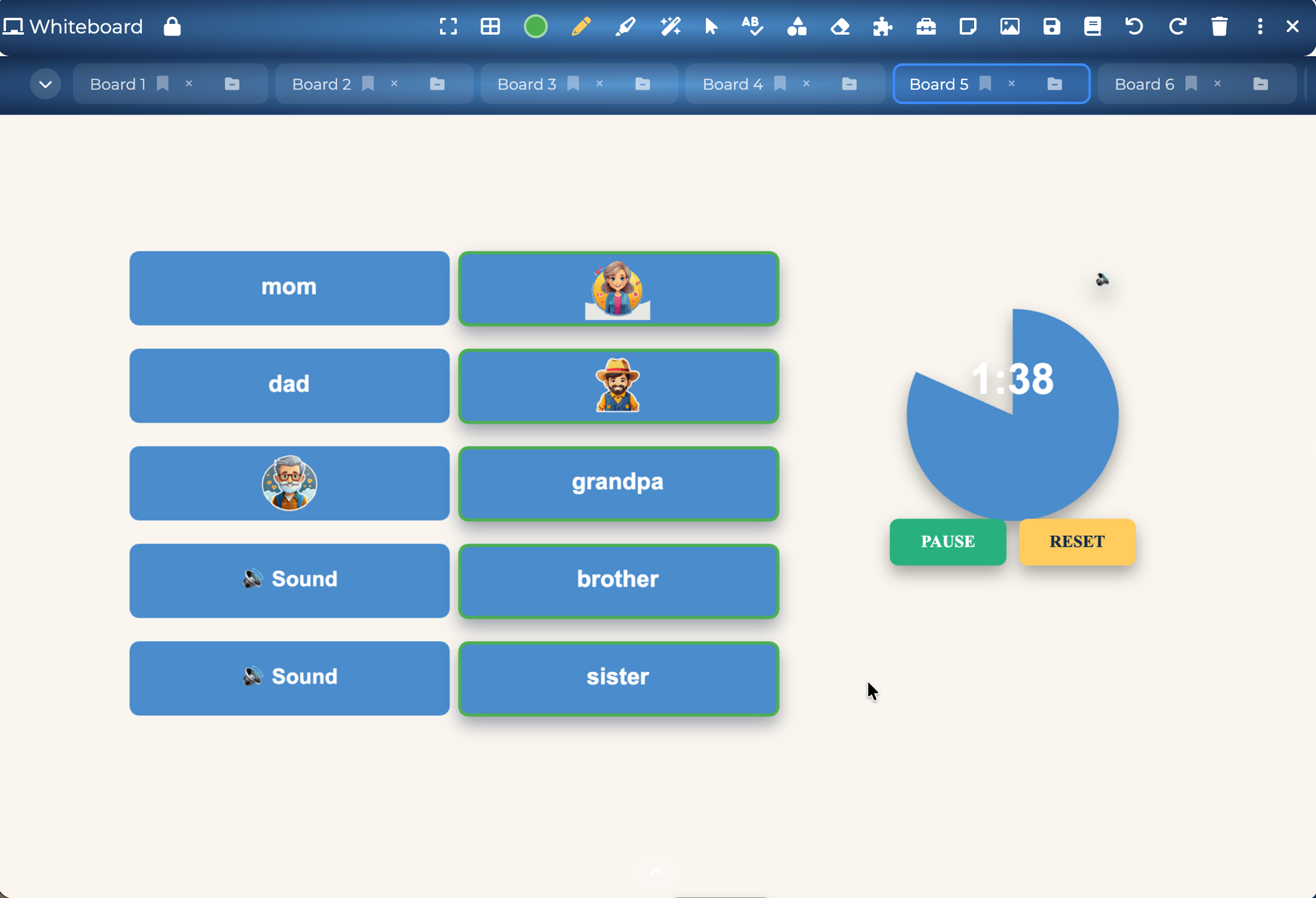
Sometimes the simplest structure is the most useful: one question, a little thinking time, and thirty seconds per student.
A timed speaking round makes the expectation clear. Students know they will have a turn, and they know they do not need to fill several minutes.
Choose a prompt that fits your lesson, such as “What is one thing you would change about your town, and why?” Then give everyone a quiet moment to prepare before starting the first turn.
Use a timer widget to keep each contribution to the same length. In Super Teacher Classroom, you can keep that timer within your classroom setup.
Give the listeners a job, too. Ask them to listen for one detail they could ask about afterward. When the speaker finishes, invite a short follow-up question before moving on.
This creates two kinds of participation: speaking clearly during your own turn and listening carefully during someone else’s. Keep the follow-up brief so everyone still gets their allocated speaking time.
4. Build a Story Together With Dice
A shared story gives each student a small contribution to make without asking anyone to carry the whole activity.
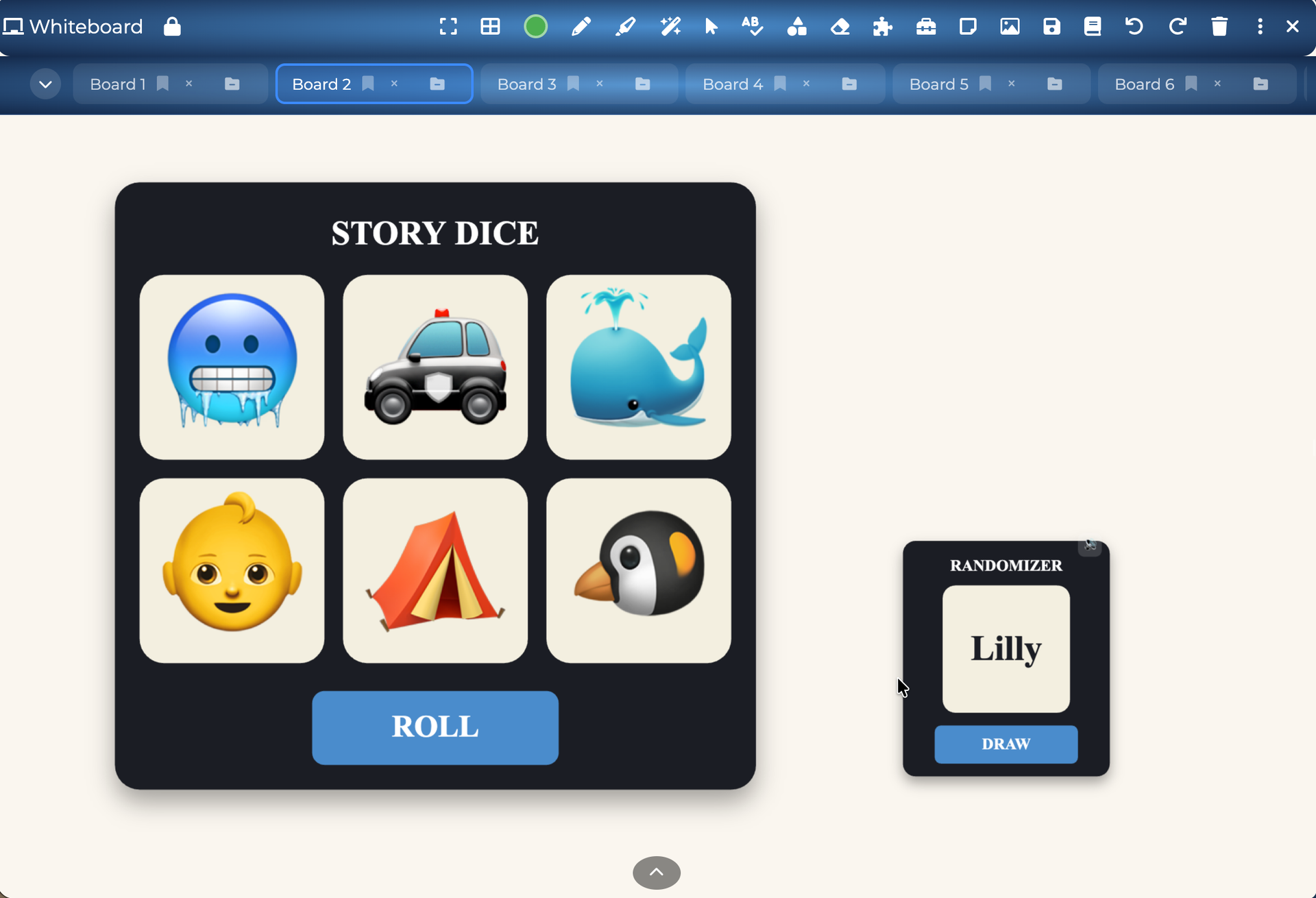
Use picture dice, such as SuperTeacher’s Advanced Story Dice with random images. Each student rolls, makes a sentence using the image, and connects that sentence to the story so far.
- The first student rolls and starts the story with one sentence.
- The next student rolls and adds a sentence using their image.
- Continue around the group, keeping each contribution connected to what came before.
- Give everyone a turn before starting another round.
The key instruction is “Continue the story,” not “Describe your picture.” Students need to listen to one another to make their sentence fit.
For beginners, one simple sentence is enough. For more confident speakers, ask for a sentence that includes the grammar or vocabulary you are practicing.
You can also use ordinary dice and assign a different story prompt to each number.
5. Randomize the Speaking Order
If the same student always volunteers first, a randomizer can change the rhythm without making the choice feel personal.
Put your students’ names into a randomizer and use it to choose the speaking order. Give everyone the same task, with preparation time before the first name is selected.
This works well for a speaking round or a short debate. In a debate lesson, including one built around an Abridge Academy curriculum, you might ask each student to state a position and give one reason.
Keep the process fair and easy to follow:
- Explain the task before choosing a name.
- Give everyone time to prepare an answer.
- Select the next speaker using the randomizer.
- Record who has spoken, or remove their name from that round.
- Make sure everyone speaks before anyone takes a second turn.
Randomize the order, not the expectations. Students should know what they are being asked to do, even if they do not know exactly when their turn will come.
Keep the Tools Handy and the Routine Simple
You do not need a complicated setup to make online small-group teaching more interactive. Polls, role plays, timed turns, shared stories, and randomized speaking rounds each give students a clear way into the conversation.
You can find separate tools around the web and use them with your existing classroom. If you would rather keep things streamlined, SuperTeacher Classroom brings these tools together in one place, so they are handy when you need them.
Start with the activity that fits your next lesson. Give students a clear prompt, a little thinking time, and a fair turn. That is a practical foundation for getting every student talking.
Hit comment bellow and let us know – what’s your favorite activity for your next small group class? ⏬️
Check out SuperTeacher
Join 2,000+ Happy Educators – Start Teaching Independently Today!
Leave a Reply