If you are teaching independently or trying to move off platforms, one question shows up fast: where do I advertise?
It sounds like the first question, but usually it is not. Most educators do not actually have an advertising problem first. They have a sales funnel problem.
You can post on Facebook, Xiaohongshu, TikTok, WeChat, Instagram, tutor directories, flyers, referrals, or paid ads. But if the path from “someone finds me” to “someone pays me” is messy, unclear, or scattered across five different tools, people drop off long before they ever become students.
That is why the real job is to build a simple, clear system from offer to paid student.
And yes, this matters whether you teach one-on-one ESL, group classes, exam prep, phonics, adult speaking, coaching, mentoring or even sell resources and courses.
Why most educators miss the full potential of their setup
One theme that comes up again and again is this: many educators use their tools only for the most basic function.
For example, some teachers use SuperTeacher only to collect payments. That works, but it misses the bigger picture. Your teacher page is not just a payment page. It is also:
- A landing page
- A booking system
- A lead collector
- A place to onboard students
- A way to enforce your policies
- A hub for referrals, feedback, and follow-up
That matters because before students even start classes, you need a system that can capture interest. If someone visits your page, tries to buy something, or downloads a free resource, that contact can become part of your student list. That gives you a way to follow up later instead of losing them forever.
And that is exactly why lead collection and lead magnets matter so much.
Start with the students you already have
Before chasing cold traffic, look at the warmest leads you already have.
One of the most powerful examples is the long-term student who is about to leave, not because your classes failed, but because life moved on. Maybe the child grew up, is starting high school, or no longer needs the same format. That is not a loss of trust. In many cases, that is proof your teaching worked.
If a family stayed with you for four or five years, that relationship is gold.
Use that moment well.
What to ask for before a long-term student leaves
- A referral
- A written testimonial
- Permission to collect feedback on your teacher page
- Permission to record one class for marketing or self-promotion
This is one of the biggest mindset shifts for independent teachers: one happy parent is often more valuable than a thousand cold leads.
An email list of random names means very little if nobody knows you. But one parent willing to say, “My child made real progress, classes were fun, and we loved learning with this teacher,” can bring in the exact kind of student you want.
That kind of social proof converts.
Think in programs, not just class credits
If you are building your offer from scratch, one of the best changes you can make is to stop thinking only in terms of classes and start thinking in terms of programs.
Class credits work well for long-term students who already understand your system. They are used to renewing packages, buying another set of lessons, and continuing as usual.
But for new families, a program is often easier to understand because it shows a path and an outcome.
Why programs sell better
Parents do not just want eight random classes. They want progress. They want to know:
- What is my child working toward?
- How long will it take?
- What result should I expect?
- What comes after this?
That is why a program-based offer can be much easier to sell than loose lesson credits.
A simple example of a program offer
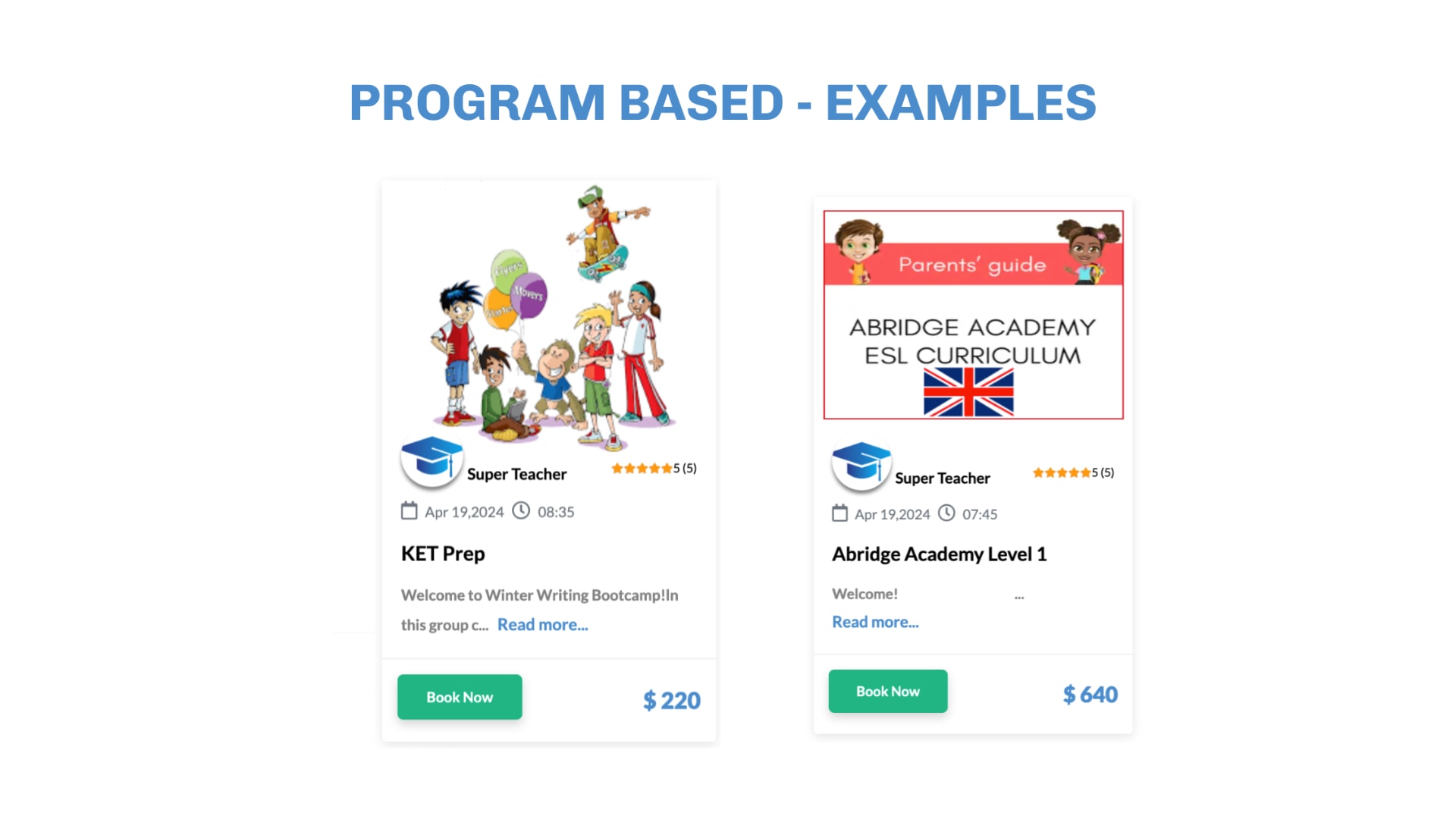
If you use a curriculum such as the amazing Abridge Academy, you can package it naturally.
For example, if one unit includes six lessons plus an assessment, you might sell:
- A monthly package of 8 classes to complete Unit 1
- Then naturally move the student to Unit 2
- Then to Level 2, Level 3, and Level 4
The same logic works for:
- KET or PET prep
- Phonics programs
- Reading clubs
- Speaking programs
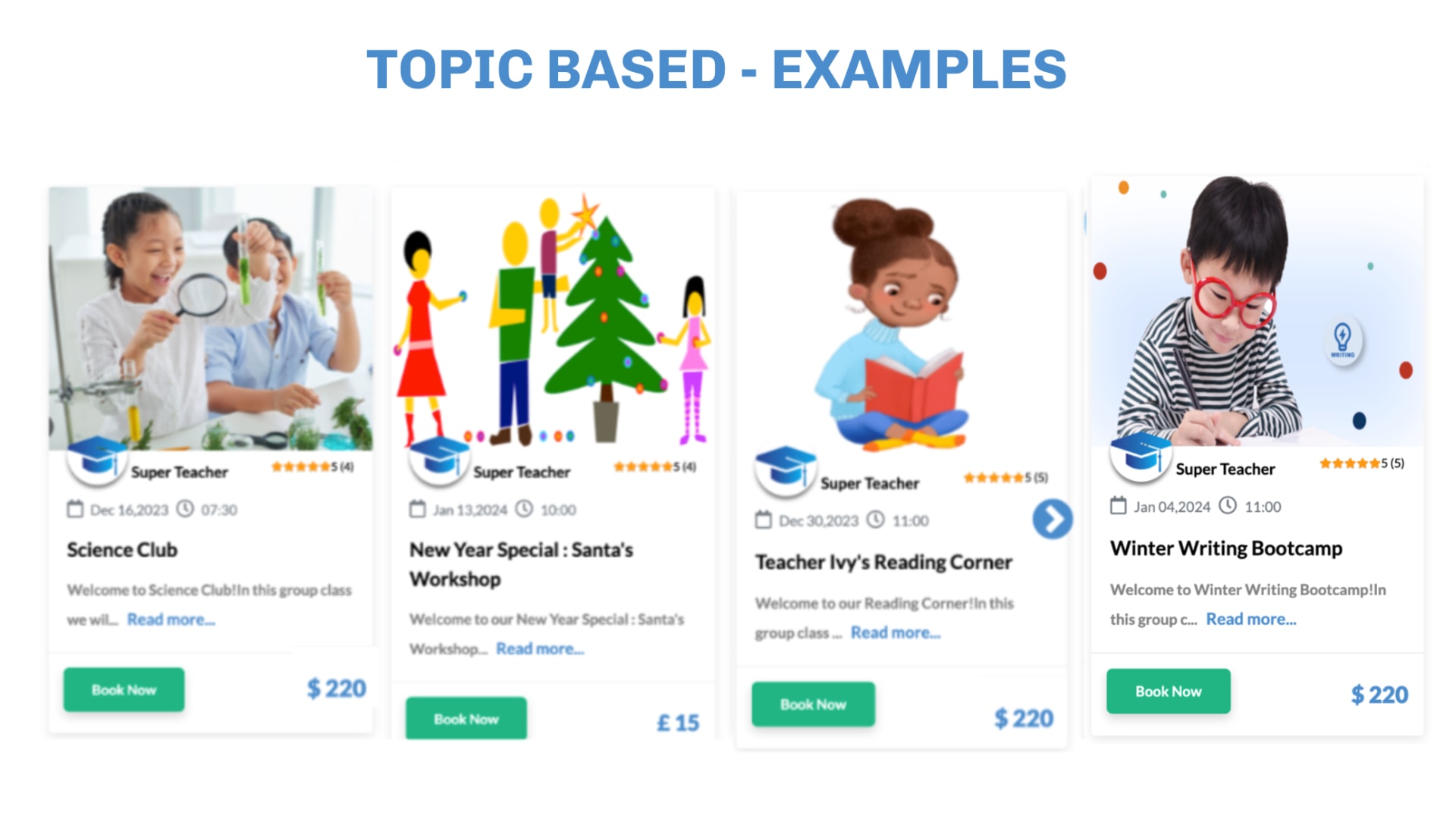
- Topic-based enrichment classes
Why group classes can simplify your funnel
If you are thinking about group classes, the good news is that they can actually be easier to automate than one-on-one lessons.
With one-on-one teaching, you often need flexibility. Students buy credits, look at your availability, message you, reschedule, and work around individual preferences.
With group classes, you are usually selling seats, not flexible time credits.
That means:
- Students see the class time up front
- They sign up directly for that session or program
- The seat is booked automatically
- They do not need to negotiate your schedule first
This can make group classes incredibly useful for book clubs, seasonal events, exam groups, one-time workshops, and mini programs.
It also creates opportunities for promotions such as:
- Bring a friend
- Buy one seat, gift one seat
- Limited seats available
- Holiday specials
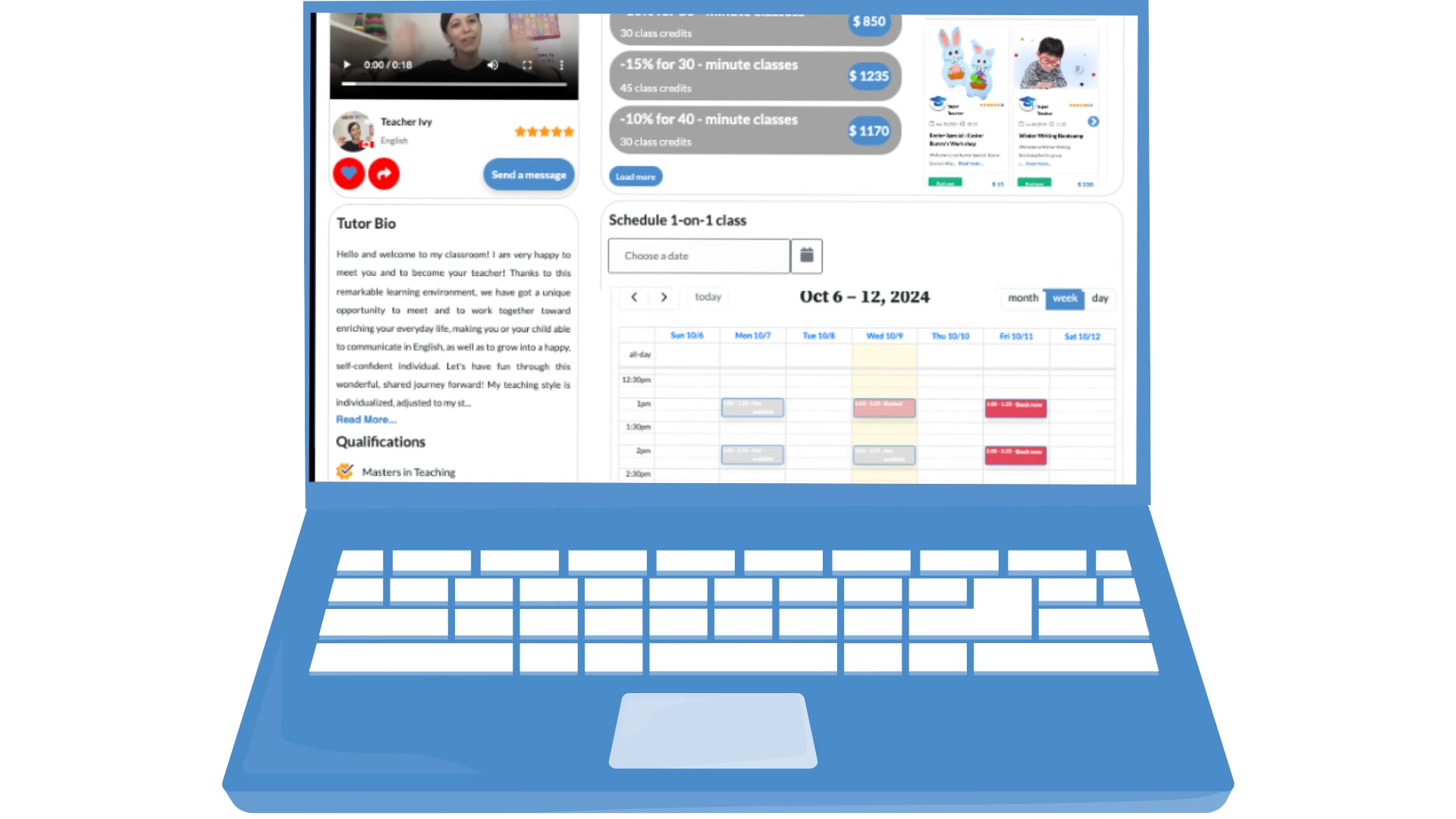
Your teacher page should be the center of the student journey
One of the clearest lessons in building a funnel is this: stop sending people everywhere.
If someone finds you and then has to bounce between Instagram DMs, WhatsApp, a payment link, a Google Doc, a PDF, and your schedule, you are creating friction.
And friction kills conversions.
Especially if your audience includes parents who do not speak English well, or who are browsing quickly on mobile, or who simply want a fast and easy purchase flow.
The better approach is one clear page where students can:
- Learn who you are
- See your intro video
- View your offers
- Read your policies
- Check feedback
- See your schedule
- Book and pay
Everything should happen in one place if possible.
The simpler the path, the better the conversion rate.
Terms and conditions are not optional
Teachers often put off writing policies because it feels technical or legal or just boring.
But your terms and conditions are part of your sales funnel too. They protect you, set expectations, and prevent awkward misunderstandings later.
At minimum, your policies should cover:
- Cancellation window
- Reschedule window
- Class credit expiration
- Camera requirements
- Headphone policy
- Parent presence rules for young learners
- Whether services are online only
A practical default example might be:
- 24-hour cancellation policy
- 8-hour reschedule window
- Clear class credit expiry terms
The key is not to copy someone else blindly. It is to create something clear that matches how you actually teach.
And once you have those terms in place, students should accept them as part of the onboarding process.
Use simple tools to remove tech overwhelm
Many excellent teachers get stuck not because they are bad at teaching, but because the tech feels annoying, clunky, or intimidating.
That is exactly why simple mini tools can make such a difference.
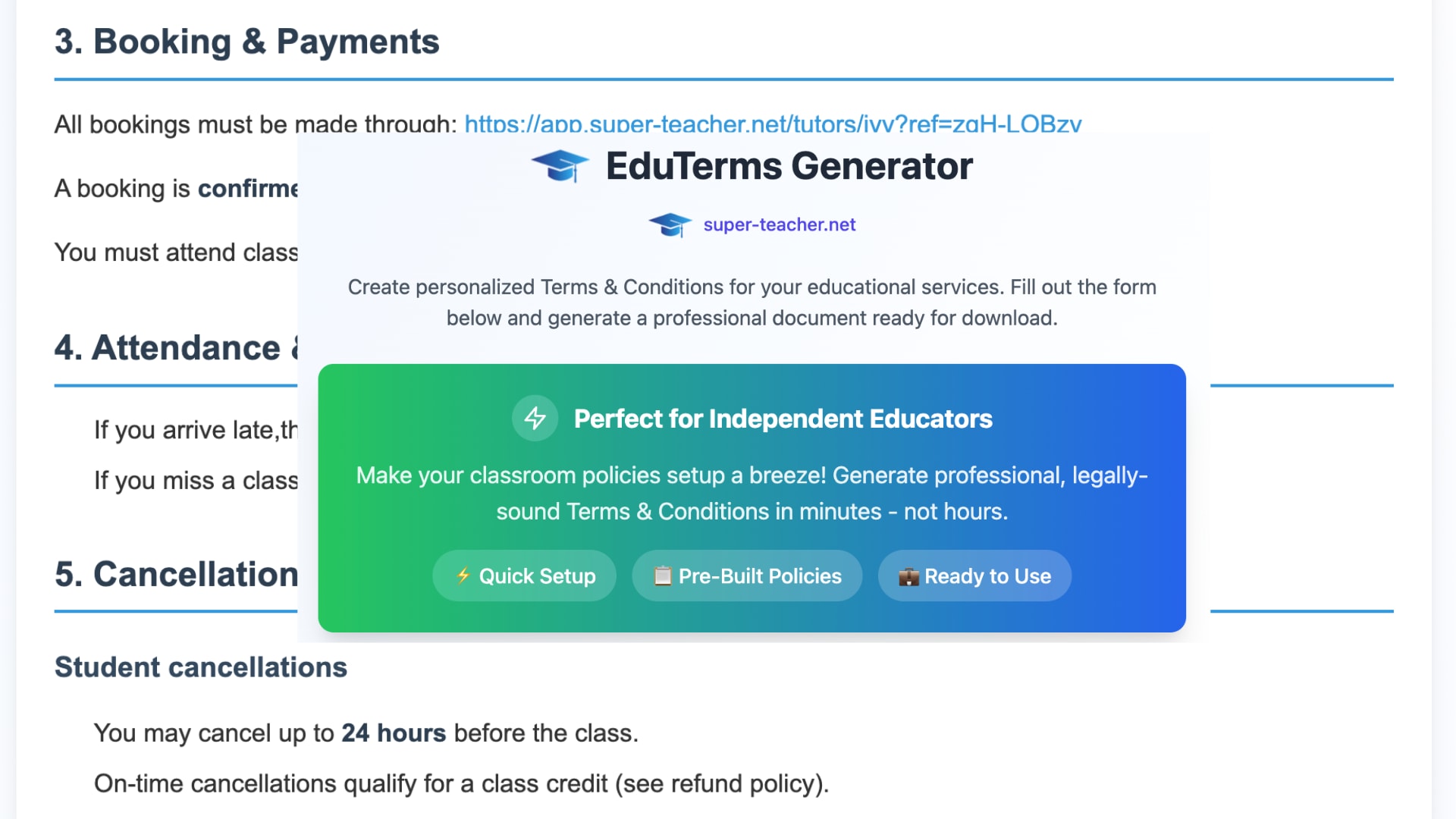
EduTerms
A ready-made terms and conditions generator can save a lot of time. Instead of staring at a blank page, you fill in a few basics:
- Your teacher name
- Your business name, if different
- Your location, such as “online”
- Your contact email
- Your booking page URL
- Your list of services
- Your default policies
Then you generate a polished terms document, edit what you need, and add it to your profile.
Fast. Simple. Done.
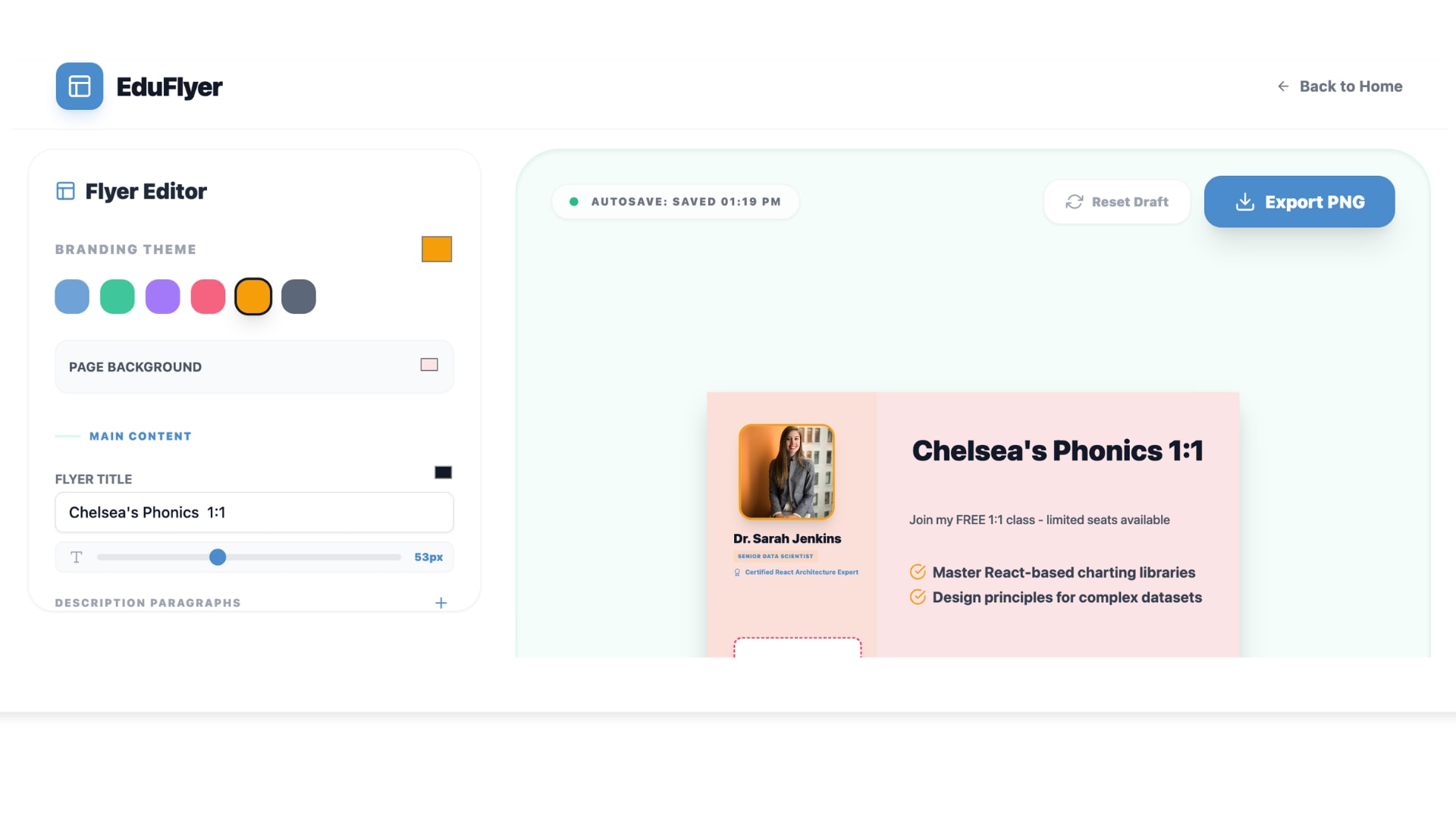
EduFlyer
The same idea applies to marketing materials.
A good flyer does not need to be fancy. It needs to be clear.
A useful flyer should quickly show:
- What you teach
- Who it is for
- Why it matters
- How to book
- A QR code or registration link
The best flyers are often the simplest ones. If your first version had a wall of text and your new one says something like “K-4 Online Tutor” plus three specific outcomes, that is already a huge improvement.
Clarity beats complexity almost every time.
The most common sales funnel mistakes teachers make
Here are the big ones.
1. Sending people everywhere
If your system depends on DMs, private messages, scattered links, and manual payment requests, you are making it harder than it needs to be.
Use one clear booking path.
2. Posting content without a call to action
Helpful content is nice. But if people do not know what to do next, many of them do nothing.
Your post, flyer, or video should include a clear next step, such as:
- Book here
- Join the program
- Reserve your spot
- Comment for details
- Message me to enroll
On some platforms, especially Chinese platforms, you need to be careful. Direct links, QR codes, or contact IDs can trigger restrictions. In that case, your call to action may need to be softer, like asking people to comment or send a private message.
3. Trying to market on every platform at once
This is exhausting and usually ineffective.
If you have several audiences, pick one audience first. Then pick one main channel where that audience already spends time.
Go deep, not wide.
4. Having an unclear offer
If someone cannot understand what you teach, who it is for, and what result they get within a few seconds, your offer is still too vague.
Attention spans are short. Be specific.
5. Making booking complicated
If someone has to ask you how to book, how to pay, or what happens next, the system is not clear enough yet.
What a sales funnel actually looks like
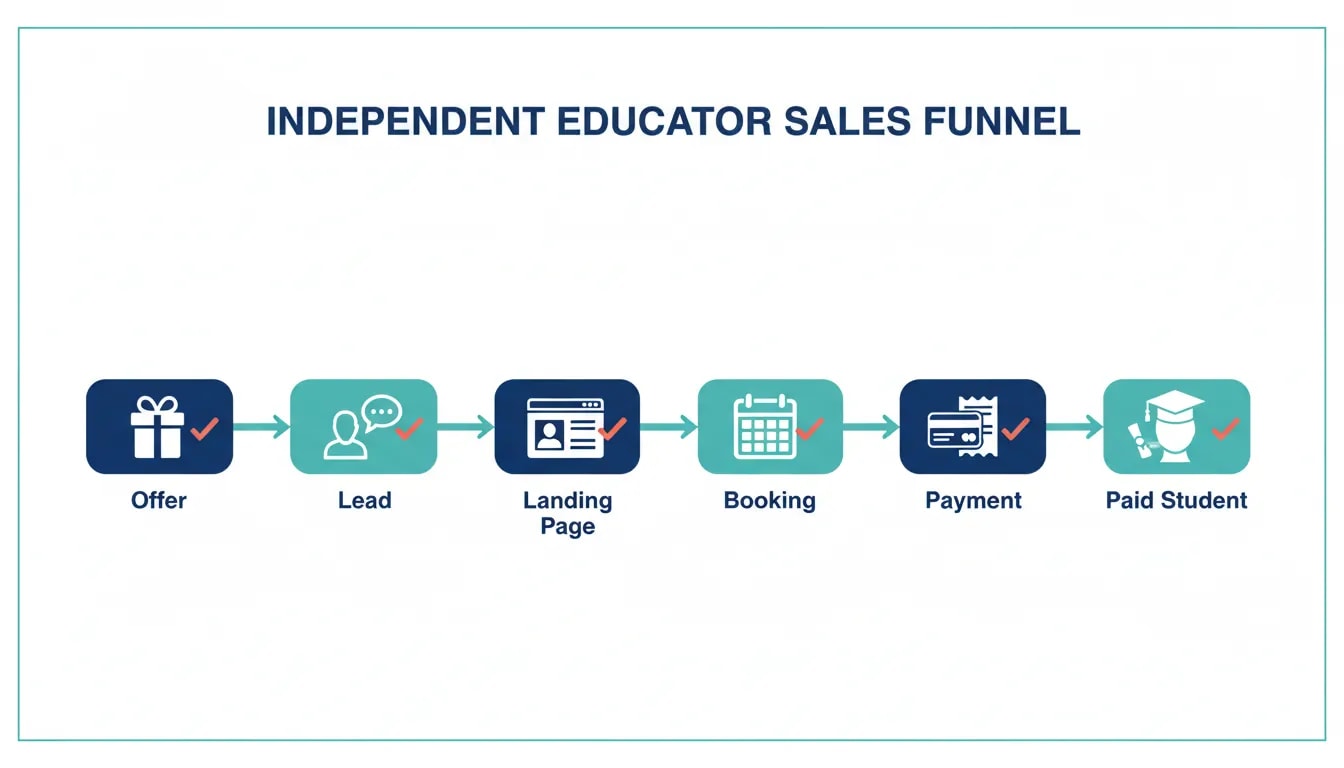
A sales funnel is simply the journey someone takes from discovering you to becoming a paying student.
Here is the basic flow:
- They find you through social media, referrals, flyers, directories, or word of mouth
- They click your link or scan your QR code
- They land on your page
- They understand your offer quickly
- They see how to book or buy
- They pay
- They become your student
To improve your funnel, identify where the friction is.
Ask yourself:
- Is my offer clear?
- Is my landing page ready?
- Is my availability up to date?
- Is my payment method connected?
- Are my policies in place?
- Do students know what to do next?
That is where your real work starts.
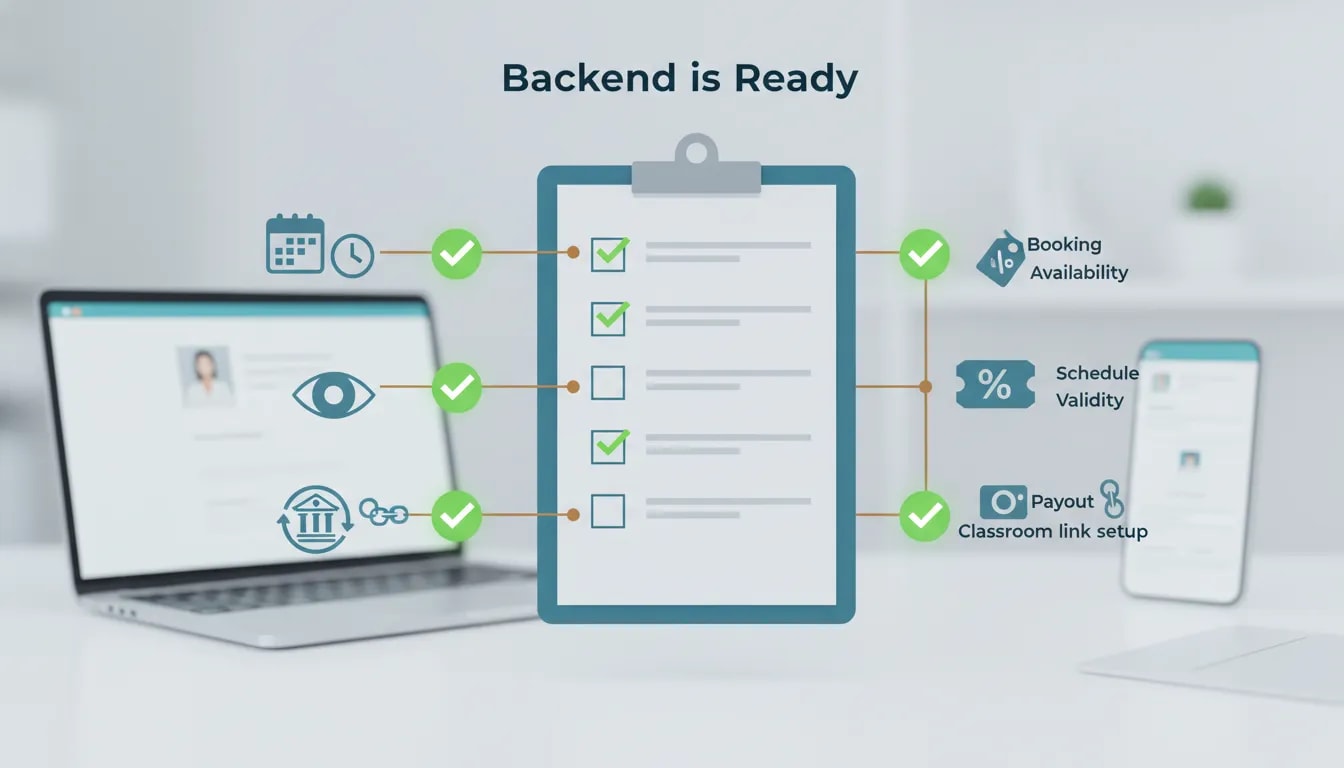
Make sure the backend is actually ready
This part is not glamorous, but it matters.
Before promoting anything, check these basics:
- Your booking availability is open
- Your offers are visible
- Your coupon codes have not expired
- Your schedule matches what students can buy
- Your payout method is connected
- Your classroom link is set up
If a parent clicks your flyer, likes your offer, and then sees no available slots or a broken booking process, trust drops immediately.
Simple things matter.
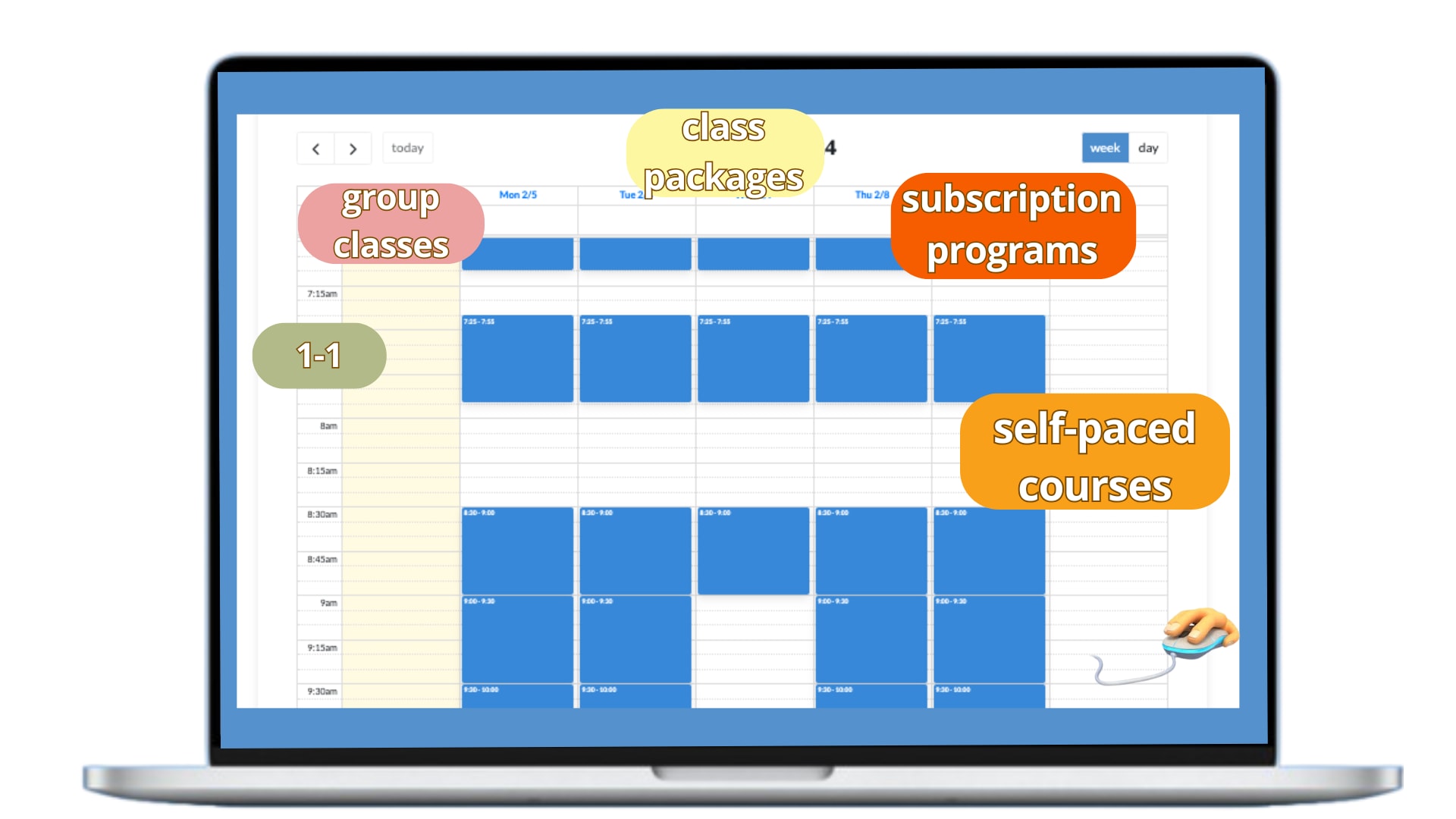
What can you actually sell?
More than most teachers realize.
One-on-one classes
Still a solid base offer. Especially useful for flexible scheduling and personalized teaching.
Group classes
Great for automation, seat-based sales, and events.
Programs
Ideal for showing progress and outcomes.
Courses
If you create material in PowerPoint, video, PDFs, or another format, you can package it into a course. This works for:
- Teaching students directly
- Giving bonus resources to existing students
- Selling learning materials
- Building another income stream
Memberships
This is more advanced, but powerful. A membership can combine:
- Class credits
- Homework
- Feedback
- Resource libraries
- Bonus support
For example:
- Level 1: Class credits only
- Level 2: Class credits plus homework
- Level 3: Class credits, homework, and full access to a learning library
This helps you charge properly for the extra support many teachers are already giving away for free.
Free offers work better when they still feel exclusive
If you want to attract new students, offering a free class or free resource can help.
But there is a smarter way to do it.
Instead of simply labeling something “free,” it often works better to make people register and use a coupon code.
Why?
Because psychologically it feels more valuable. It feels like access was granted, not dumped in front of them. It also means they leave their contact details and become part of your lead list.
That gives you a way to continue the relationship.
Where should you actually advertise?
Now we can come back to the question everyone asks first.
The answer is still the same: where your audience is.
But now you can answer that more intelligently because you know what you are selling, who it is for, and how people will buy it.
If you teach children
Your actual audience is usually parents.
If you want to stop teaching at 3 a.m.
Choose a region that matches your ideal schedule, not just your previous experience.
If you have multiple audiences
Pick one first and sick to it at least 3-6 months.
Platform ideas by audience and region
China
- Xiaohongshu for content marketing and discovery
- WeChat for referrals and social-circle sharing
- Douyin as a Chinese TikTok-style option
- Bilibili for public video content
Xiaohongshu is especially strong for reaching young parents interested in educational content. One important tip: keep your username consistent across platforms, especially if you want people to find you on WeChat afterward.
Also, Chinese platforms can be strict about links, QR codes, and contact details. Sometimes the best call to action is simply to invite comments or private messages.
And if you post on Xiaohongshu, consistency matters. Posting at least every second day in the beginning helps the platform understand and distribute your content.
WeChat strategy for referrals
WeChat is not really about public discovery the same way other platforms are. It is more about trusted circles.
A practical strategy is this:
- Create a simple flyer with your QR code
- Send it to a happy parent
- Ask them specifically to share it in their WeChat Moments
- Offer a small referral reward if appropriate
That can be enough to get traction. You do not need a huge audience if the right parent shares you.
Europe and general international audiences
- YouTube
- TikTok
- LinkedIn for some adult learners or professional niches
TikTok can be especially useful for younger parent audiences.
South Korea
- KakaoTalk
- YouTube
Japan
- Line
- YouTube
Content marketing ideas that actually make sense for teachers
You do not need to become a full-time influencer to market yourself.
You just need useful, consistent content that matches your niche.
Simple content ideas
- Mini teaching clips
- Short lesson snapshots
- Quick tips for parents
- Student transformation stories
- Seasonal class promotions
- Free printable resources
- Blog posts if writing suits your niche
If you already teach with strong materials, you can repurpose what you use. A longer class recording can become several short content pieces.
That makes the process much more sustainable.
A particularly smart niche angle
One especially strong idea is marketing not just to children, but to parents who want help supporting learning at home.
That gives you a powerful position. Plenty of people teach children. Fewer teachers clearly support parents too.
If you create resources parents can use outside class, that can become a real niche.
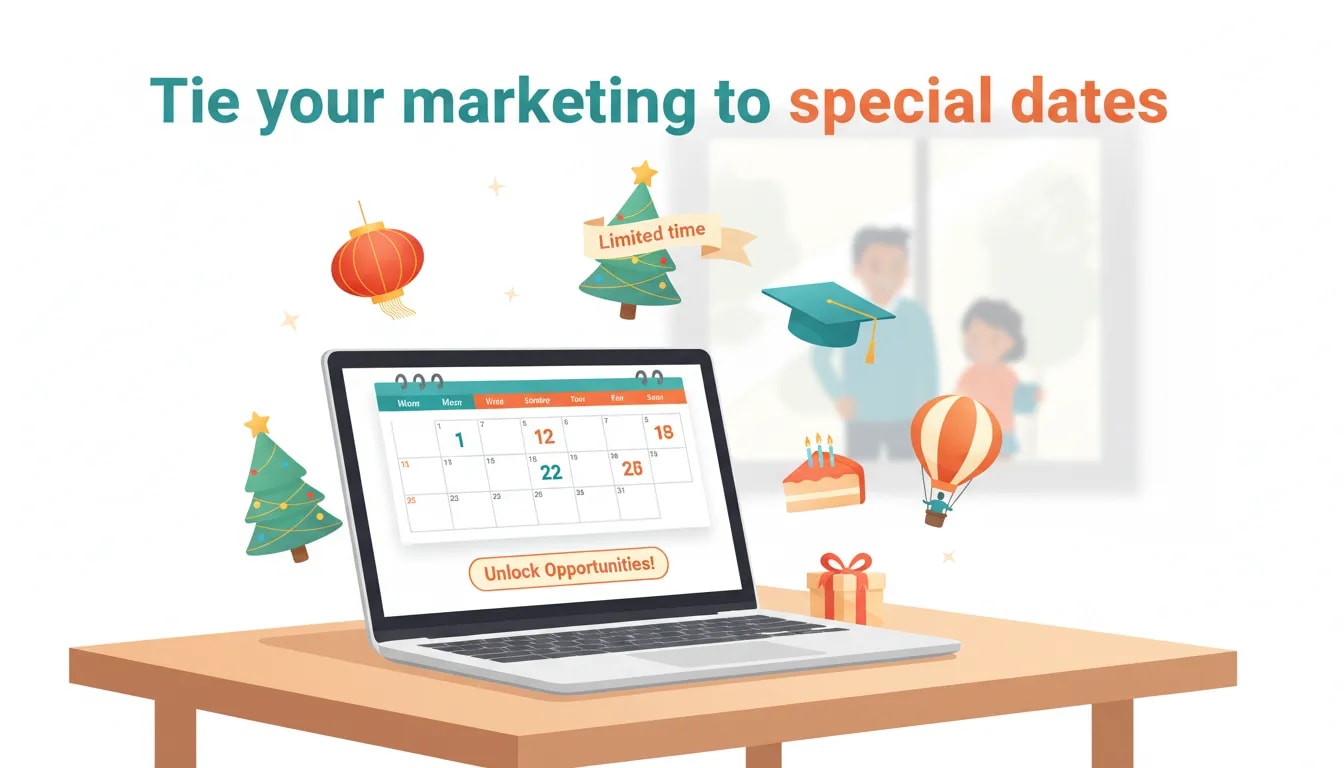
Tie your marketing to special dates
Another practical strategy is linking your promotions to events and holidays.
Parents are often more willing to buy when there is a reason to act now.
Examples include:
- Mooncake Festival
- Children’s Day
- Spring Festival
- Christmas
- Chinese New Year
- A child’s birthday
- Graduation season
This works because special occasions naturally create urgency, gift-buying energy, and a reason to try something new.
Your student list is more valuable than it looks
Once people interact with your page, they can be added to your student list. That list is not just an address book.
You can use it to:
- See who purchased
- Track active and inactive students
- Message students
- Book classes for them
- Assign class credits
- Gift classes or courses
- Add personal notes
That means your sales funnel does not end at the first purchase. It also supports retention, reactivation, rewards, and referrals.
And once you start noticing how many classes some students have taken, you may even spot opportunities to reward long-term loyalty.
Identify the friction point in your funnel
If you are not getting students yet, the next step is not to panic and post everywhere.
It is to ask one calm, useful question:
Where exactly is the friction?
It might be:
- Your offer is too vague
- Your landing page is incomplete
- Your availability is not set up
- Your terms are missing
- Your content has no call to action
- Your audience is unclear
- You are marketing in the wrong place
- You are offering too many things at once
When you identify that point clearly, the whole process gets easier.
Keep it simple, consistent, and easy to trust
That is really the whole theme here.
Teachers often assume they need more:
- More platforms
- More resources
- More information
- More complicated systems
Usually they need less.
Less scattered communication. Less confusion. Less clutter. Less friction.
A strong sales funnel for an independent teacher is usually built on a few simple things done well:
- A clear offer
- A clean landing page
- Simple booking and payment
- Clear policies
- A focused audience
- Consistent marketing in the right place
- A way to capture and follow up with leads
That is how you move from “I teach well” to “I can reliably attract and onboard paid students.”
And once that system is working, marketing stops feeling like random effort and starts feeling like a real business process.
Sign up with SuperTeacher
Register for free, pick the right plan later
Leave a Reply